












Free shipping on orders over $99

30 Years of PRO TREK
PRO TREK timepieces are relied upon by users as an essential and authentic part of their outdoor gear. PRO TREK watches integrate sensing technology, including Triple Sensor, with functional tool design. Since the debut of PRO TREK in 1995, the brand has been dedicated to technological innovation while expanding support for a diverse range of outdoor activities — from mountaineering on peaks over 8,000 meters to casual hiking, trekking, fishing, and camping. In spring 2022, PRO TREK adopted bio-based resin to help reduce environmental impact, marking a key milestone in the brand’s journey. This development signaled the brand’s move to a new stage, enhancing outdoor experiences and fostering a deeper connection with the natural world.
PRO TREK is on an eternal quest to reach even higher heights.
1995
PRO TREK brand debut
For everyone who loves mountain-climbing
PRO TREK got its start in 1995 as a brand focused on adapting original sensing technologies from Casio for outdoor use. The first PRO TREK watch, the DPX-500, featured Triple Sensor technology, offering measurements of compass bearing, barometric pressure, altitude, and temperature. This helped users track changing conditions and make quick decisions on the spot. With its precision, the first PRO TREK watch quickly established the brand identity during a boom in mountain climbing in Japan. The DPX-500 became a favorite among climbers, standing out as groundbreaking outdoor gear that delivered essential data like altitude and compass bearing on a wristwatch.
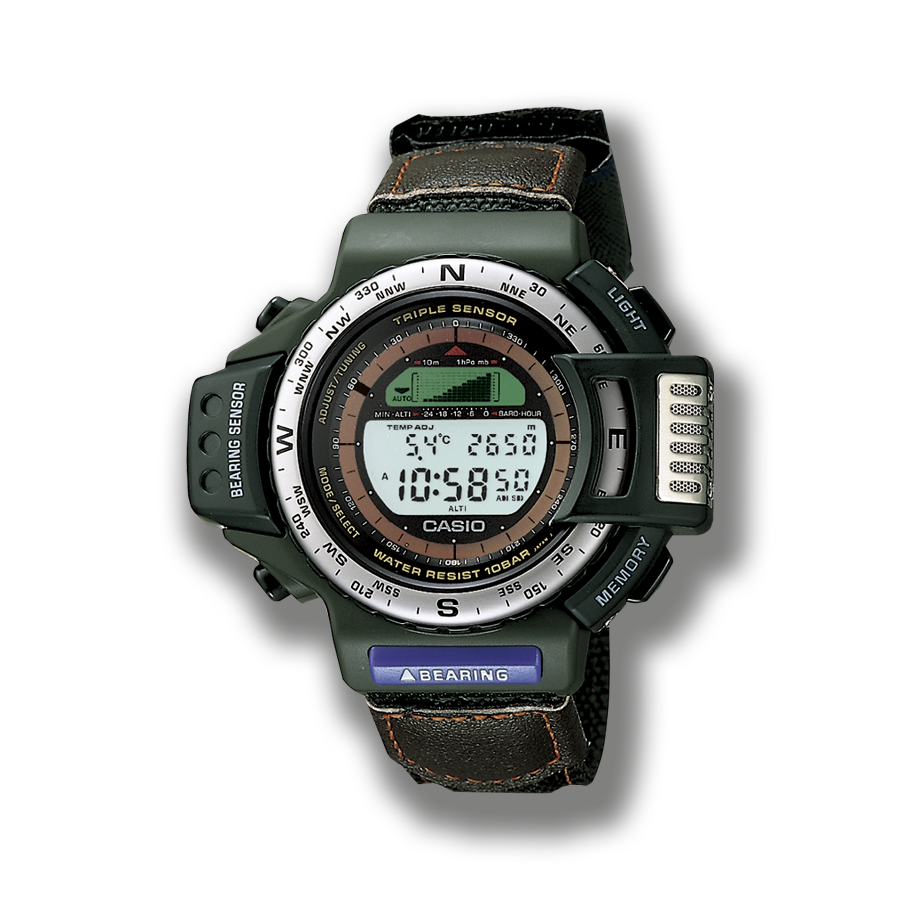
DPX-500
The first PRO TREK, packed with sensing technology
Technology developed for PRO TREK

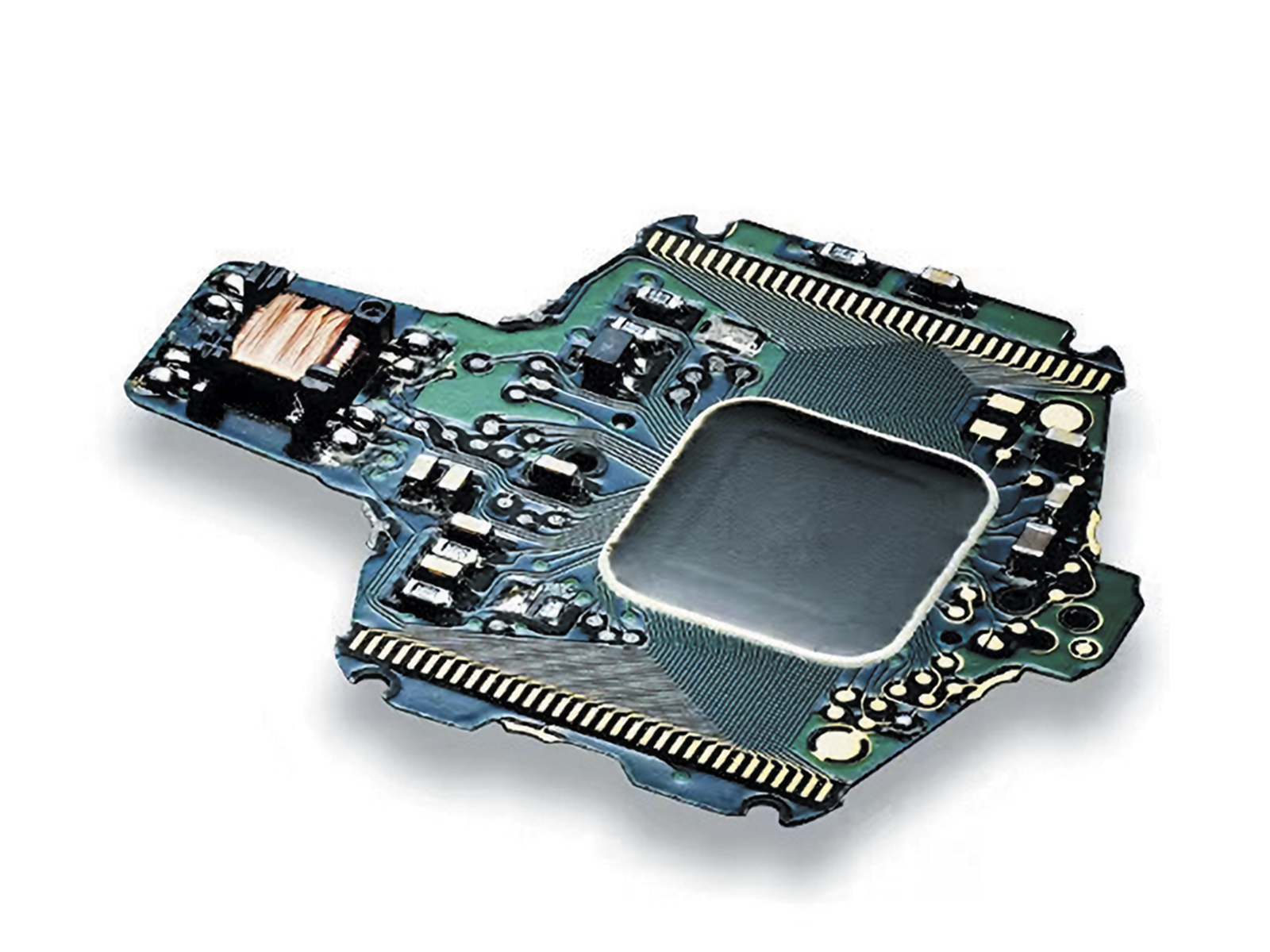
Triple Sensor Ver. 1
The core of PRO TREK technology for measuring natural phenomena
Casio developed high-density mounting technology to integrate magnetic, pressure, and temperature sensors into a wristwatch, enabling battery-powered readings of compass bearing, barometric pressure, altitude, and temperature. This innovation, achieved a year before the launch of PRO TREK, played a key role in charting the brand’s course and providing reliable tools for outdoor enthusiasts.
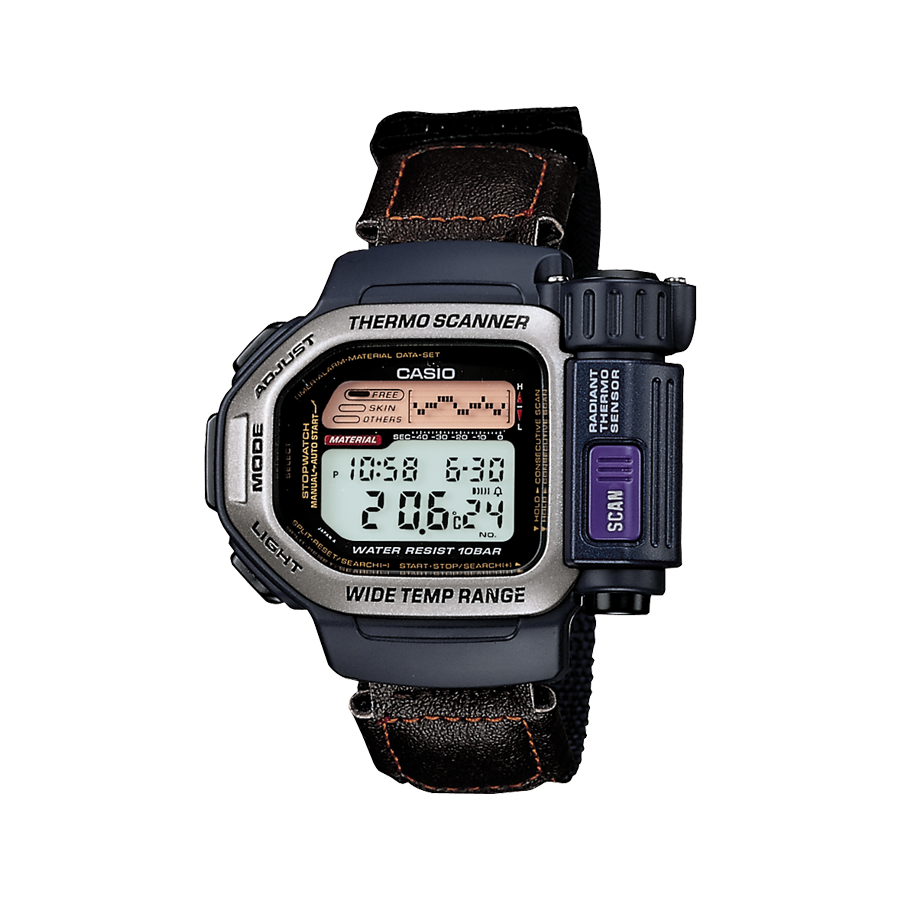
1995
DPX-300
Thermo scanner (infrared radiation sensor)
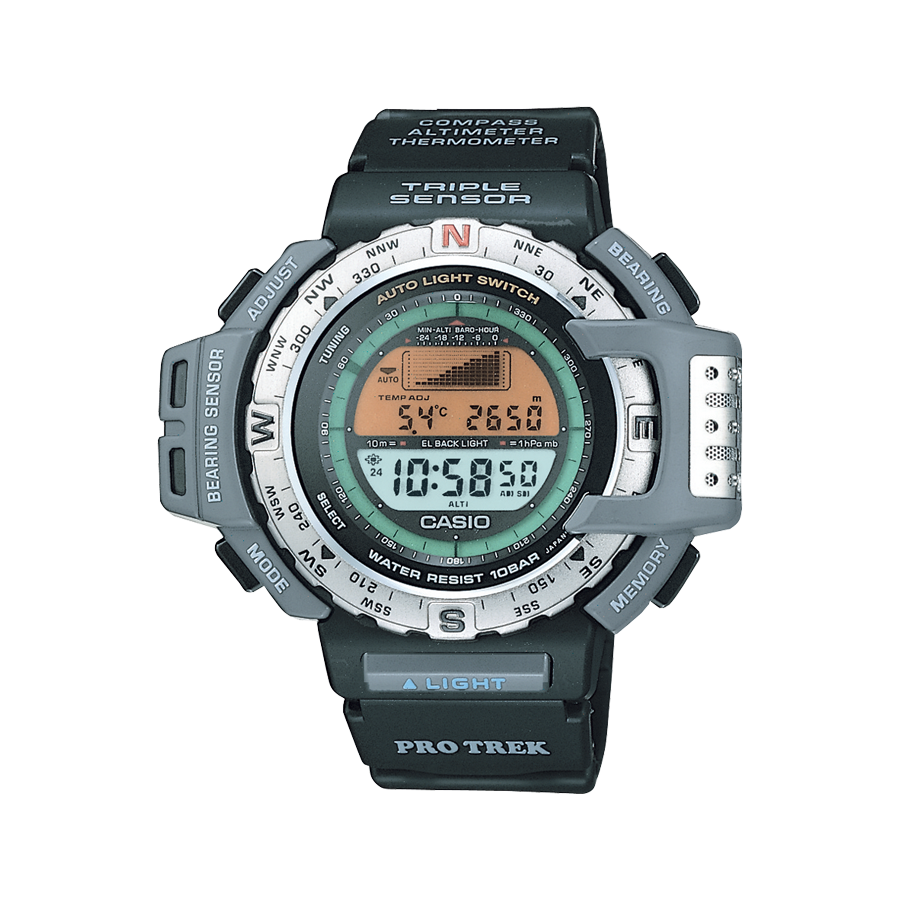
1996
PRT-40
Auto-EL backlight
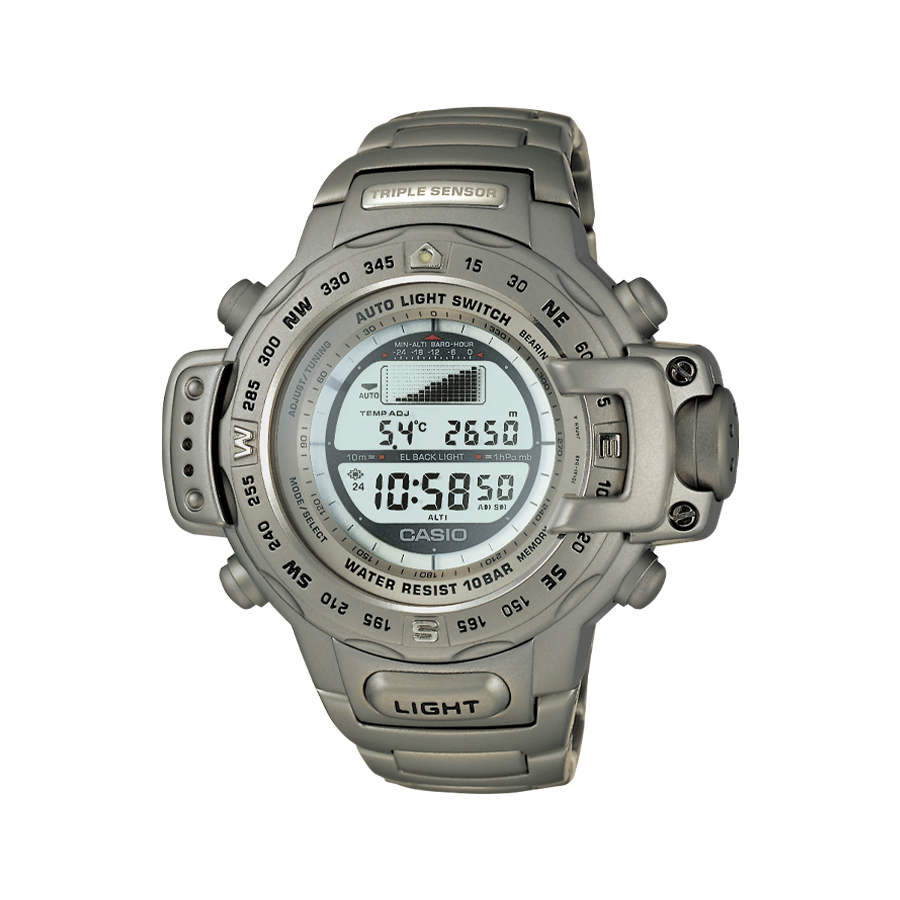
1998
PRT-4000
First full-metal case
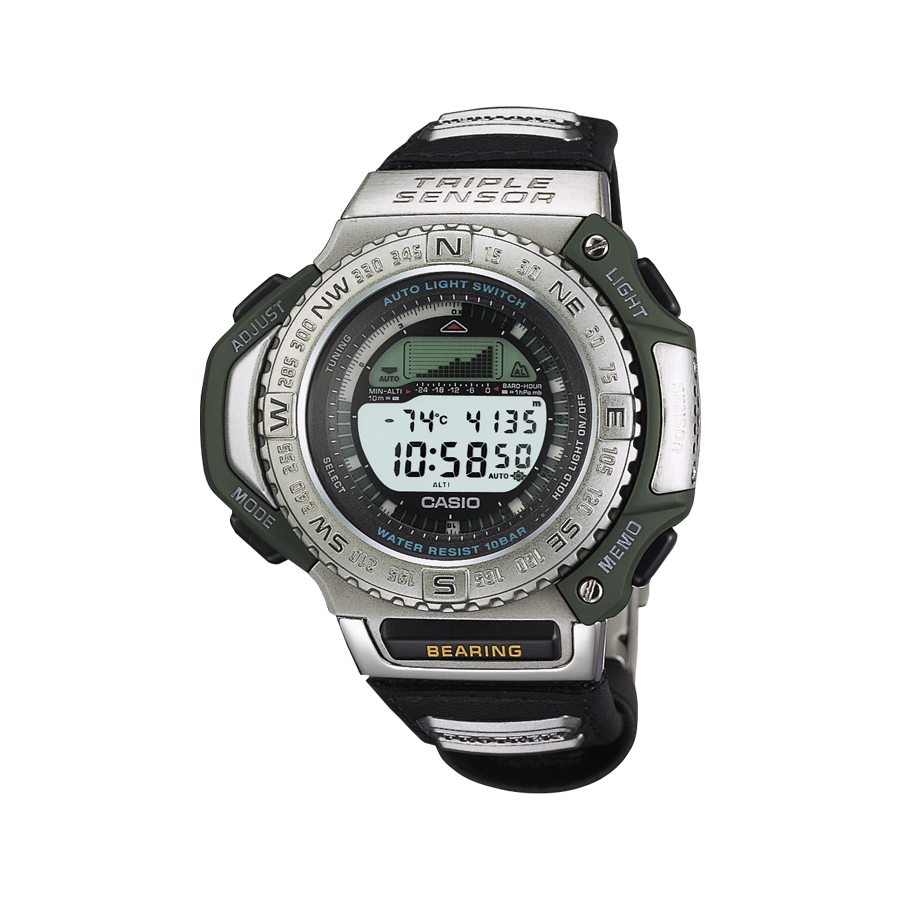
1999
PRT-1400
Altimeter measuring up to 6,000 m
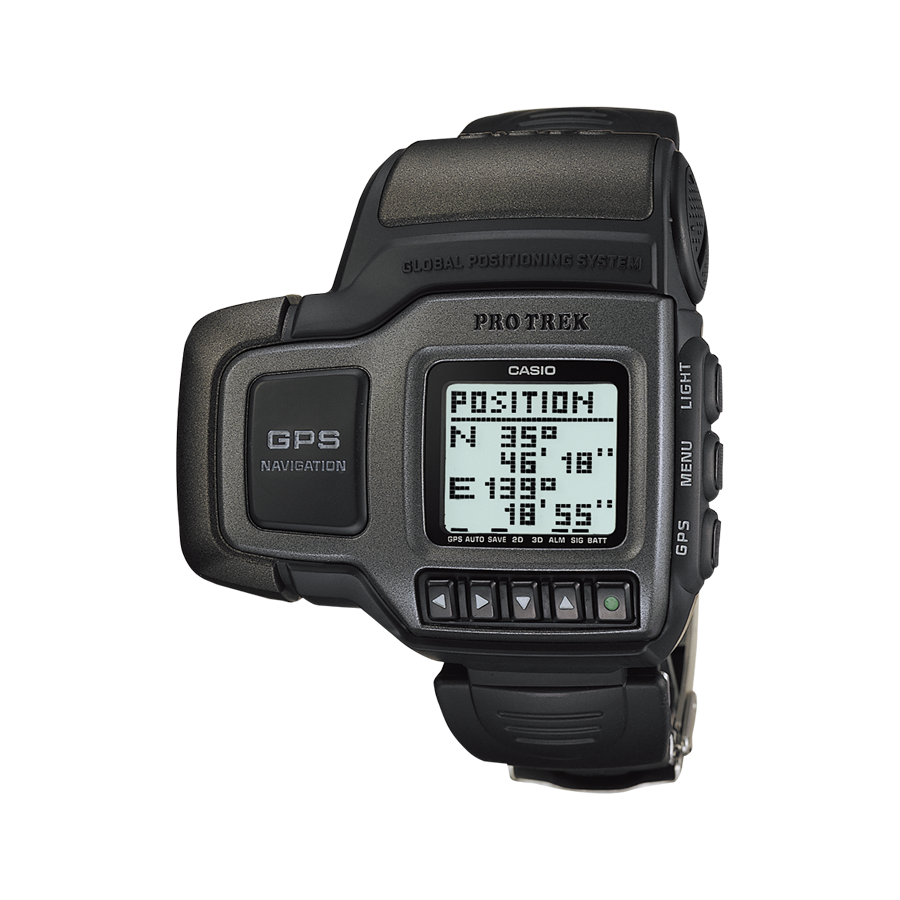
1999
PRT-1GPJ
World’s first* watch with built-in GPS
* Based on a Casio survey
2000
Conceptualizing the watch as an outdoor tool
A passion for operability from the user’s perspective
In 2000, significant progress was made in establishing PRO TREK watches as an essential and authentic part of users’ outdoor gear. Embracing the idea that effective tools must be developed with real-world experience, mountain-climbing experts were invited as brand ambassadors to provide input based on their professional knowledge. Their feedback led to the brand-new concept of refining the wristwatch to become a true outdoor tool, addressing key issues such as the size of lettering, operational ease, and complex display information. The PRG-40, for example, improved usability with its large, easy-to-read display, direct sensor buttons for one-touch access to compass bearing, barometric pressure, and altitude, and a dual-layer LCD for graphical compass display.
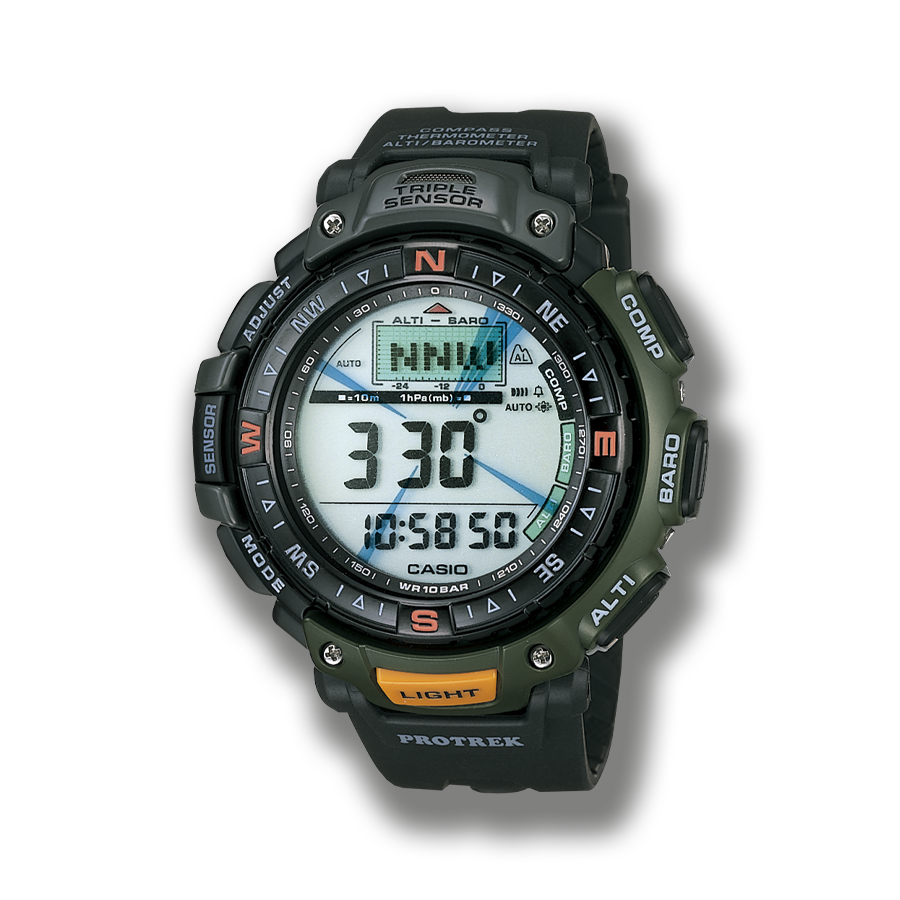
PRG-40
Equipped with direct sensor buttons, dual-layer LCD, and altitude measurement up to 10,000 meters
2002
Incorporation of solar charging
Delivering long-lasting, reliable, advanced performance
While features like Triple Sensor and a large LCD offered excellent functionality, they also consumed significant power, raising concerns about battery replacement and maintenance, such as a need for periodic water-resistance tests. To address this, the PRG-50 introduced the Tough Solar power system, harnessing sunlight for reliable energy during outdoor activities. The newly developed Triple Sensor Ver. 2, designed for solar-powered use, ensured stable operation of the watch's many functions with minimal power consumption.
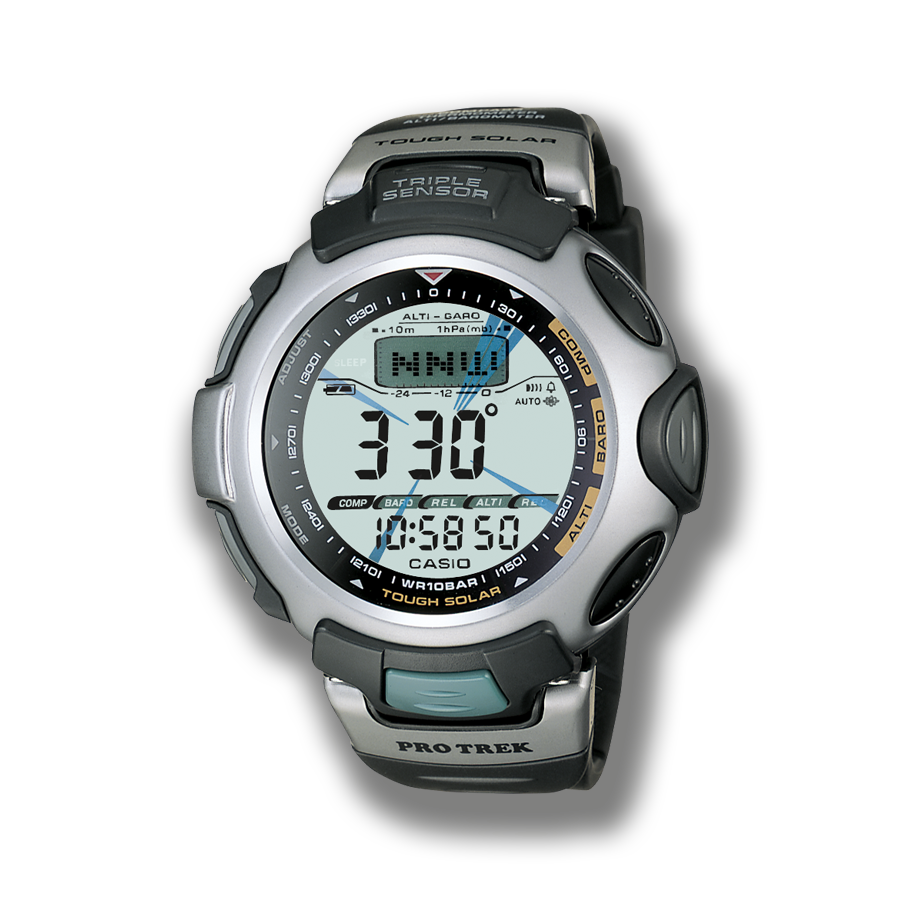
PRG-50
Featuring Tough Solar charging and Triple Sensor Ver. 2
Technology developed for PRO TREK

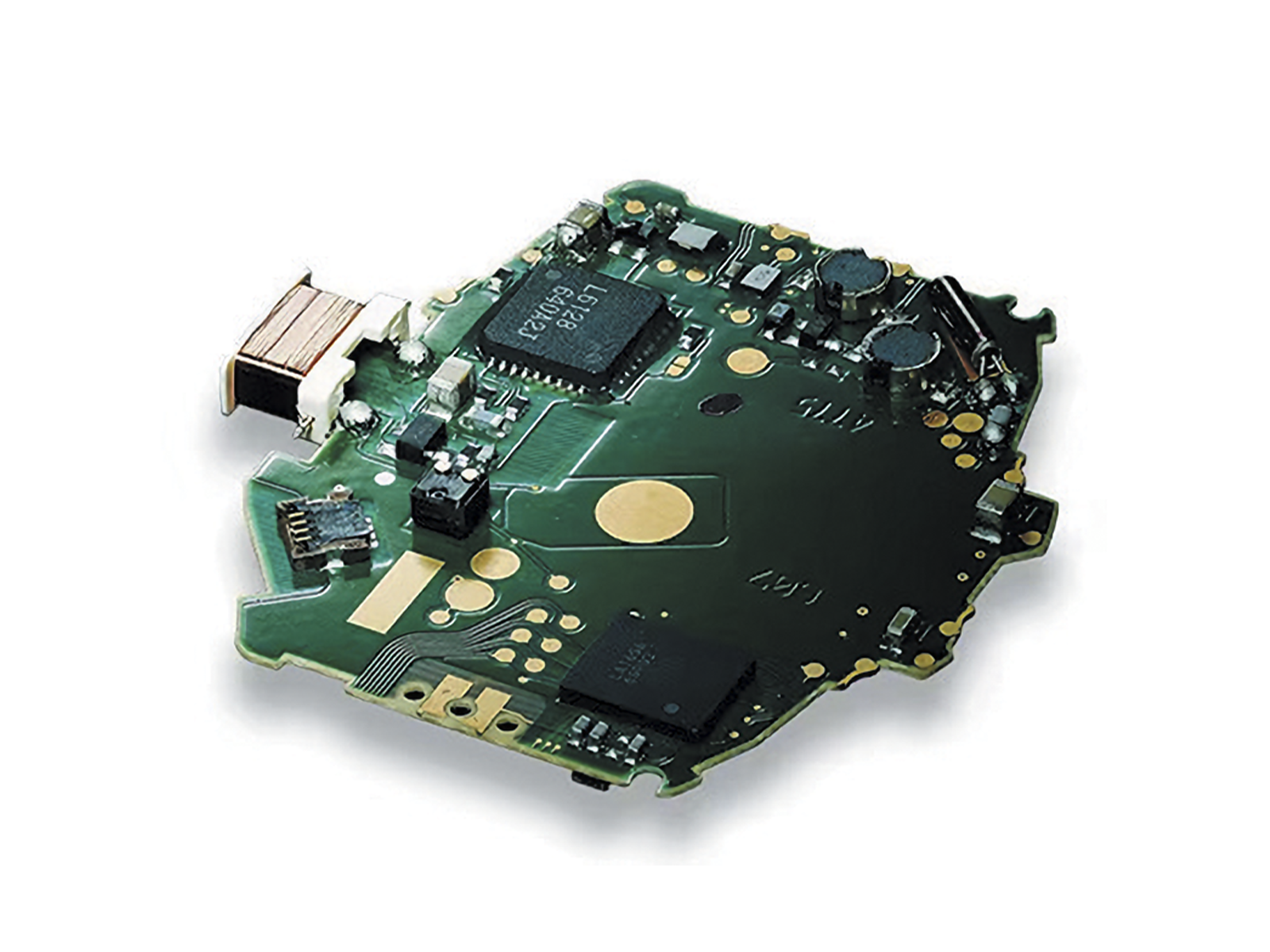
Triple Sensor Ver. 2
An updated version optimized for solar-powered performance
The incorporation of Tough Solar, the original solar-charging system developed by Casio, allowed sensor data to be processed using solar power alone. With the development of a new Triple Sensor system featuring low power consumption, measurement precision was also improved, for instance with enhanced magnetic sensor sensitivity, and the pressure sensor was made even smaller.
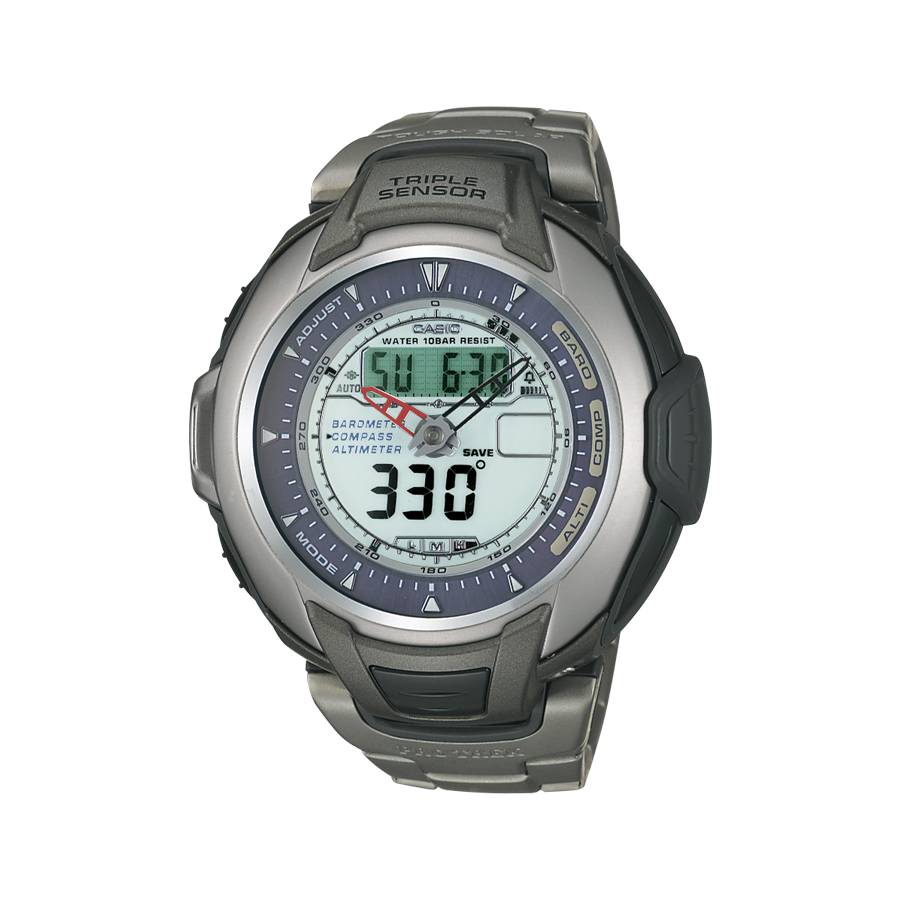
2003
PRG-60
First analog movement in watch with Triple Sensor
2005
Incorporation of radio-controlled, solar-powered functionality
Accurate timekeeping with further reliability and convenience
Casio introduced its first radio-controlled watch in 1995, and the integration of this feature into a PRO TREK watch had long been anticipated. By using standard time radio waves for automatic time calibration, this feature ensures precise timekeeping — a key concern in mountain climbing — and eliminates the need for manual adjustments, offering greater convenience for outdoor activities. Initially, interference with the compass bearing sensor from the magnetic antenna posed a challenge, but this was resolved by positioning the antenna inside the case. The PRW-1000 was the first to combine radio-controlled accuracy with solar-powered technology, reducing both time-setting tasks and the need for battery replacements. It introduced a new level of practical functionality and sophistication to outdoor gear.
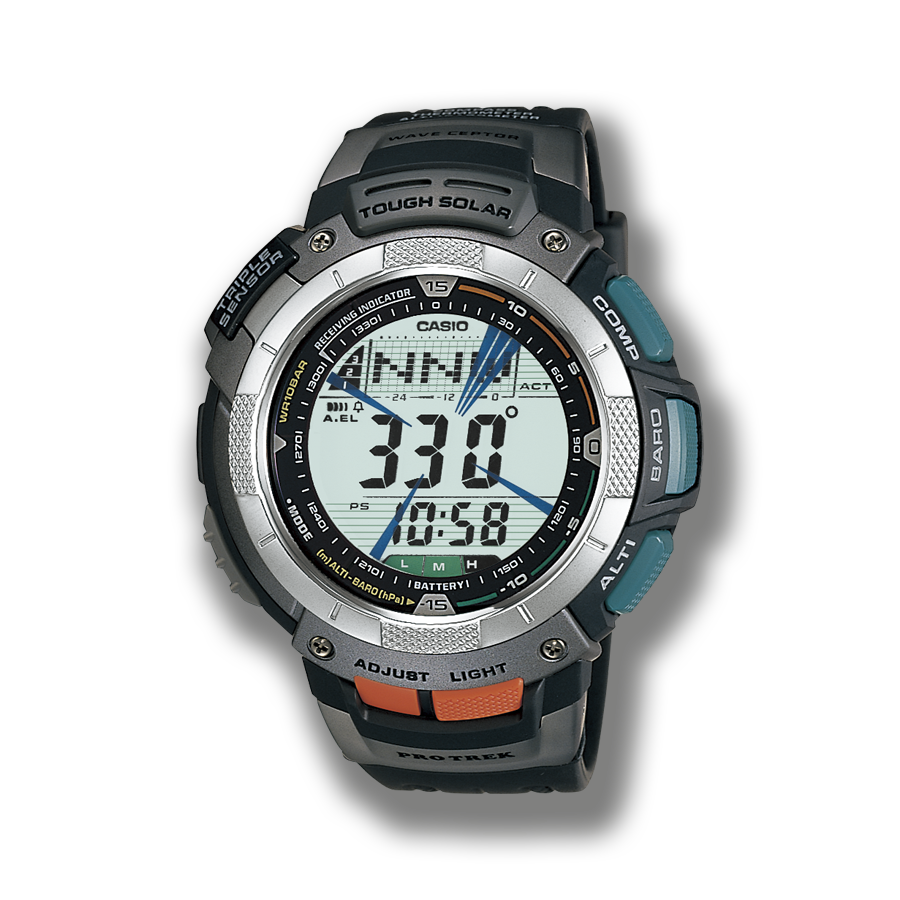
PRW-1000
Adopting radio control and Tough Solar charging
2007
More compact design
Achieving a fit that never impedes wrist movement
A meeting with mountaineer Hirotaka Takeuchi after the development of the PRW-1000 marked a key turning point in the evolution of PRO TREK. Takeuchi reported that, during a field test in the Himalayas, he chose not to wear the watch because it felt too bulky on his wrist. This feedback ignited the development team's determination to create a slimmer design that would not hinder wrist movement, whether on snowy peaks or during rock climbing. With a lot of trial and error, they reduced the case thickness by developing a slimmer module leveraging Casio high-density mounting technology. The result was the PRW-1300, launched in 2007 as an even more refined and practical outdoor tool.
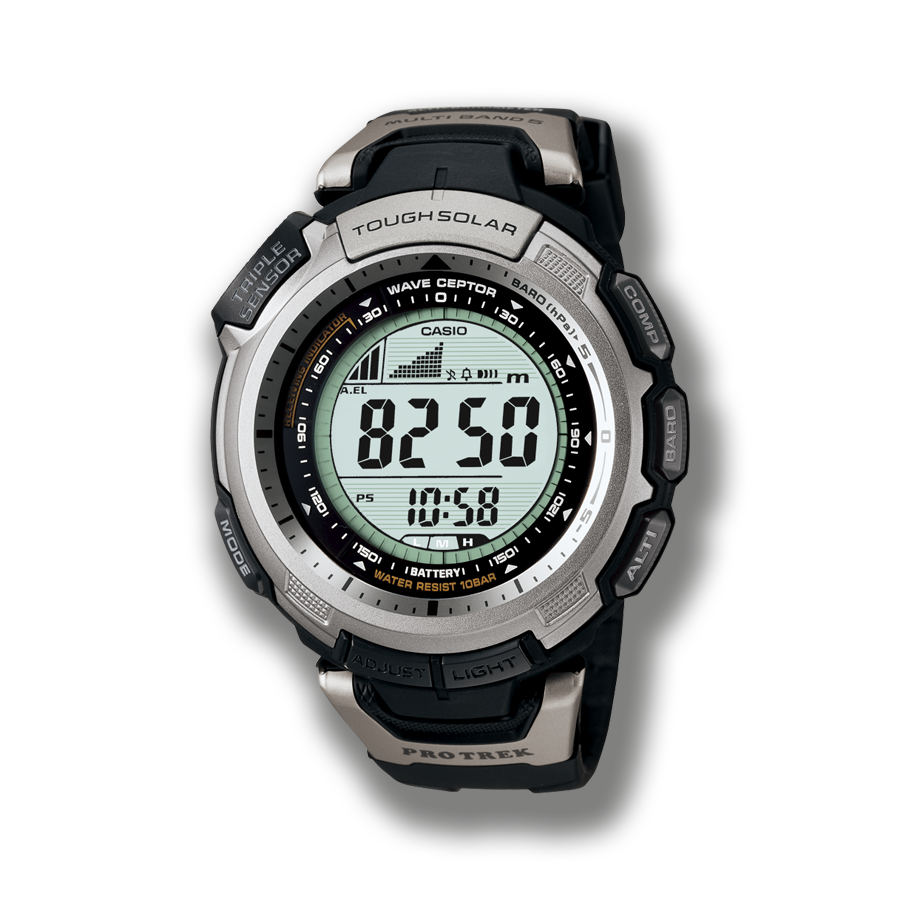
PRW-1300
Slimmer case achieved with high-density mounting technology
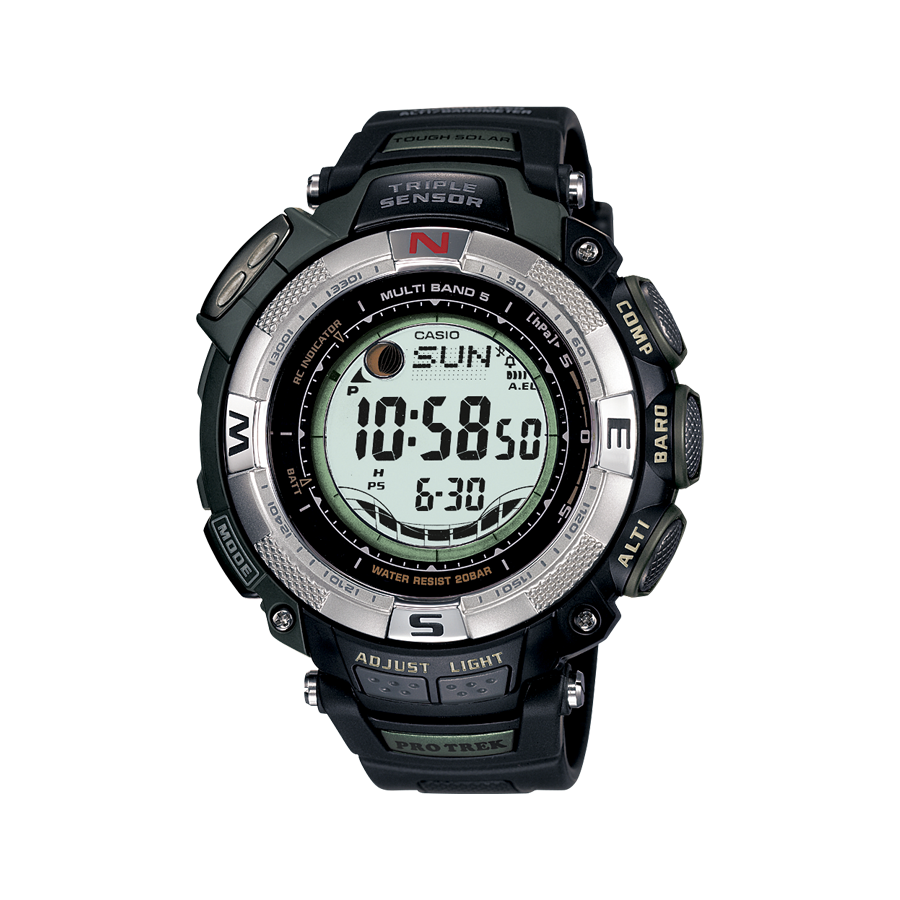
2008
PRW-1500
Water resistance up to 200 m, delivering marine sport-standard specs
2009
The flagship MANASLU line is born
A line with sights set on the highest pinnacles
In 2009, the flagship MANASLU line of PRO TREK timepieces debuted, named after the 8,000-meter Himalayan peak summited by brand ambassador Hirotaka Takeuchi. Developing the first MANASLU watch brought a new challenge: reintroducing the dual-layer LCD that had been removed to achieve a slimmer design in previous models. Starting from scratch, the team successfully integrated radio-controlled, solar-powered technology while preserving a sleek form. Kathmandu, a key hub for Himalayan climbers, was added to the world time presets. Assembled at Yamagata Casio’s Premium Production Line for high-end models, the PRX-2000T combined outstanding technical specs with a sleek metal design, delivering both functionality and refined craftsmanship.
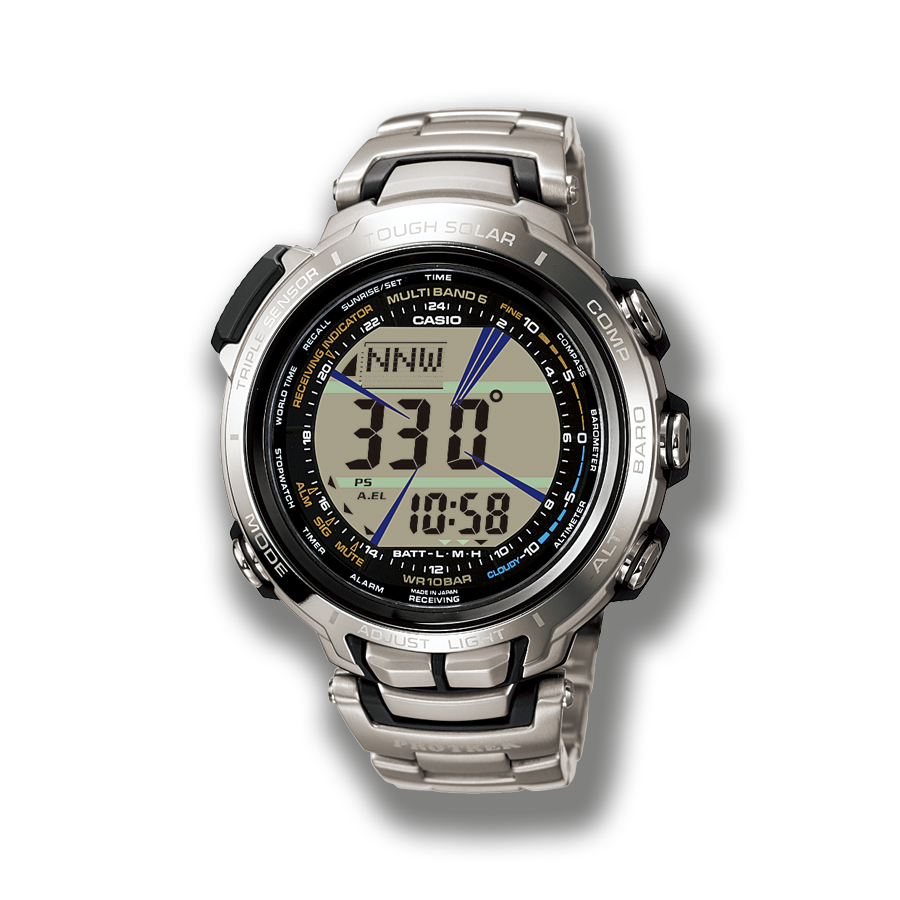
PRX-2000T
First watch of the flagship MANASLU line: Supporting the challenge of summiting 8,000-meter peaks
MANASLU
Named after the legendary mountain peak
Standing at 8,163 meters above sea level, Manaslu is one of the 14 peaks on Earth higher than 8,000 meters and is known as the “mountain of the spirit.” The first successful summit by a Japanese team, led by Aritsune Maki in 1956, remains the stuff of legend. The flagship PRO TREK line was named Manaslu in homage to this daring feat.

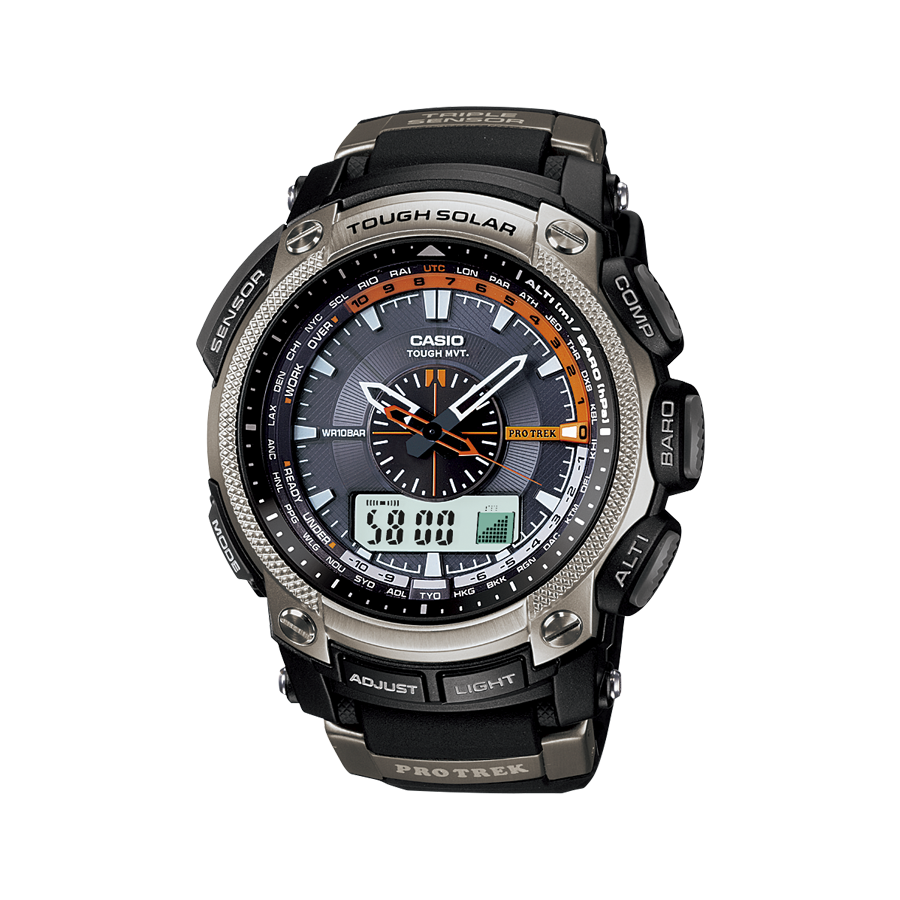
2010
PRW-5000
Analog display of sensor data
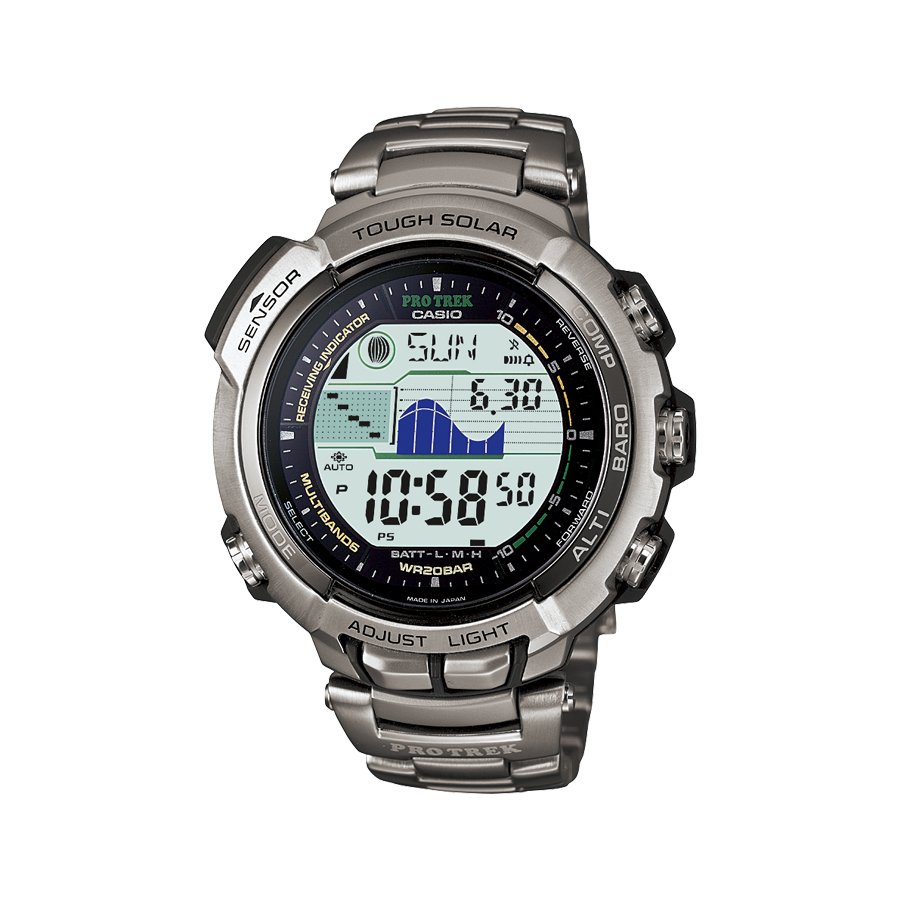
2011
PRX-2500T
Manaslu with water resistance up to 200 meters
2012
Four-hand analog display
Adding a new watch hand especially for outdoor gear
The analog display in the PRW-5000, released in 2010, allowed users to quickly grasp both elapsed and remaining time through the position of the watch hands. Building on the potential of the analog display, Casio introduced the PRX-7000T, a fully analog display watch that not only showed the time but also indicated sensor data, including compass bearings, making it a versatile tool for outdoor adventurers. On May 26, 2012, this timepiece accompanied Hirotaka Takeuchi to the summit of Dhaulagiri, where he became the first Japanese climber to conquer all 14 of the world’s mountains over 8,000 meters. The PRX-7000T marked the moment of his historic achievement, cementing its role as a trusted tool in the mountaineer’s journey.
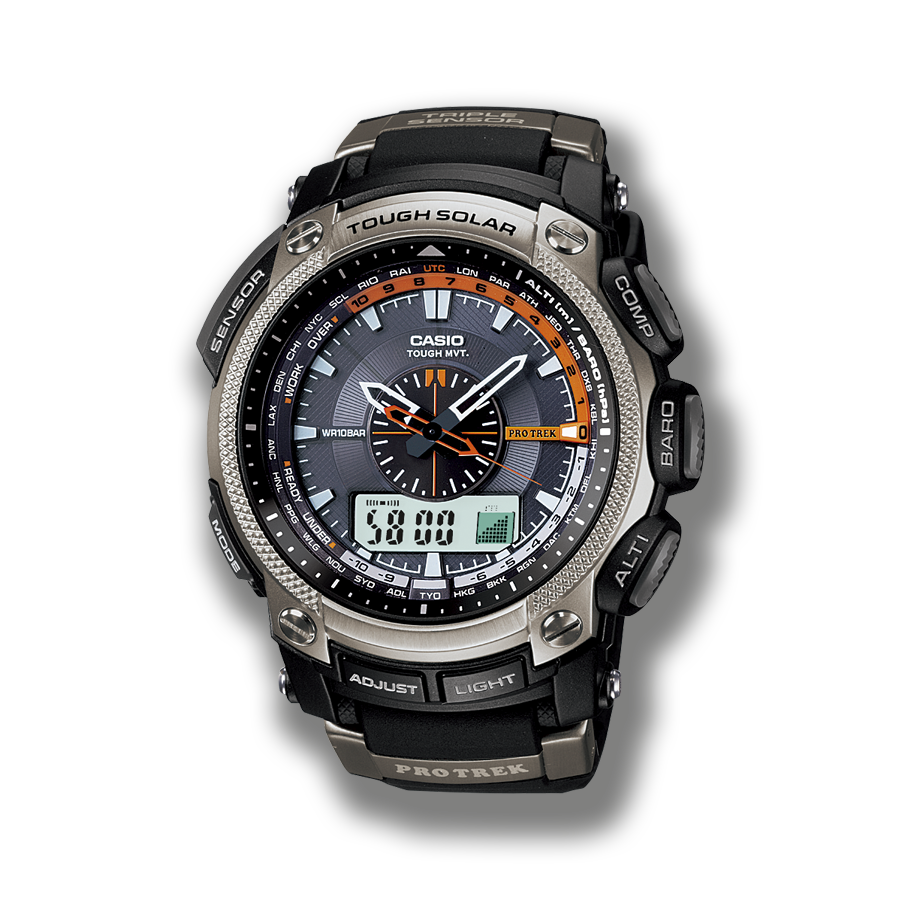
PRW-5000, released 2010: First PRO TREK with analog display of sensor values
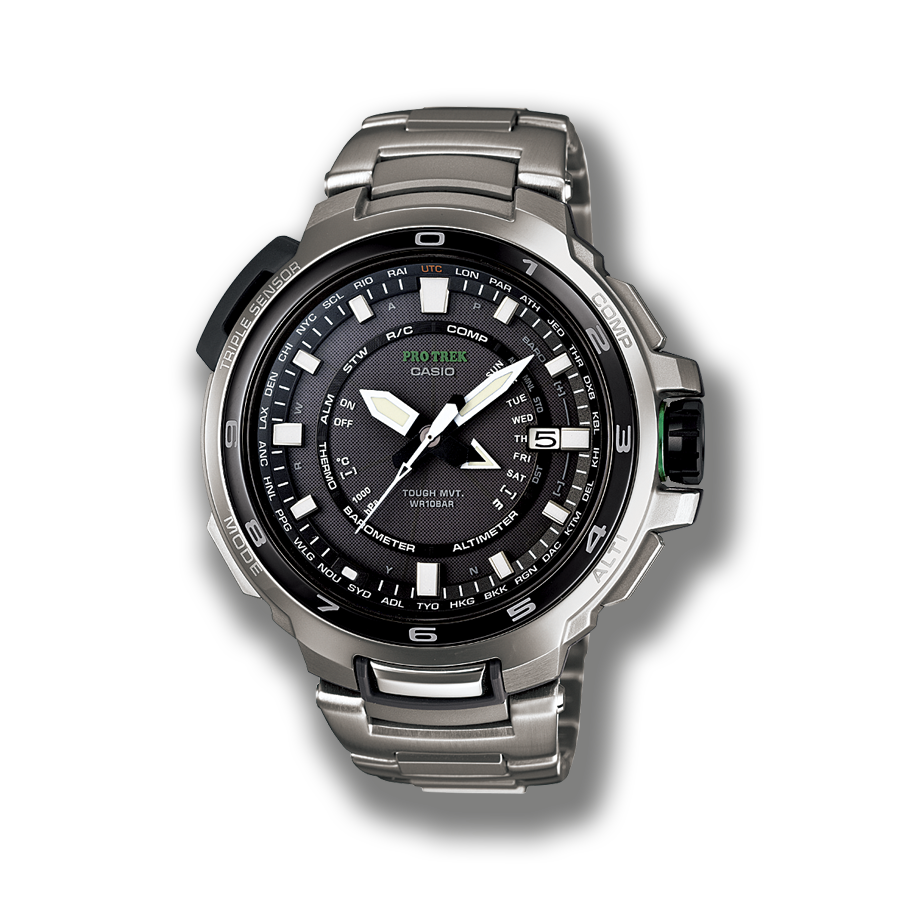
PRX-7000T
First PRO TREK with four-hand analog display
2013
Enhanced sensor precision
Delivering further improvements to measurement accuracy
Responding to demands from expert mountain climbers like brand ambassador Hirotaka Takeuchi, as well as rescue teams working in harsh mountain environments, the PRO TREK development team focused on delivering even greater measurement accuracy. The newly developed Triple Sensor Ver. 3 improved ease of use in the field, featuring 1-meter altitude measurements for more detailed data on elevation changes as well as 60-second continuous compass bearing measurement to help users stay aware of their surroundings. The module was also downsized, resulting in a slimmer, more compact form that would not interfere with wrist movement. The PRW-3000 represented a comprehensive evolution, offering both technical enhancements and a more comfortable fit.
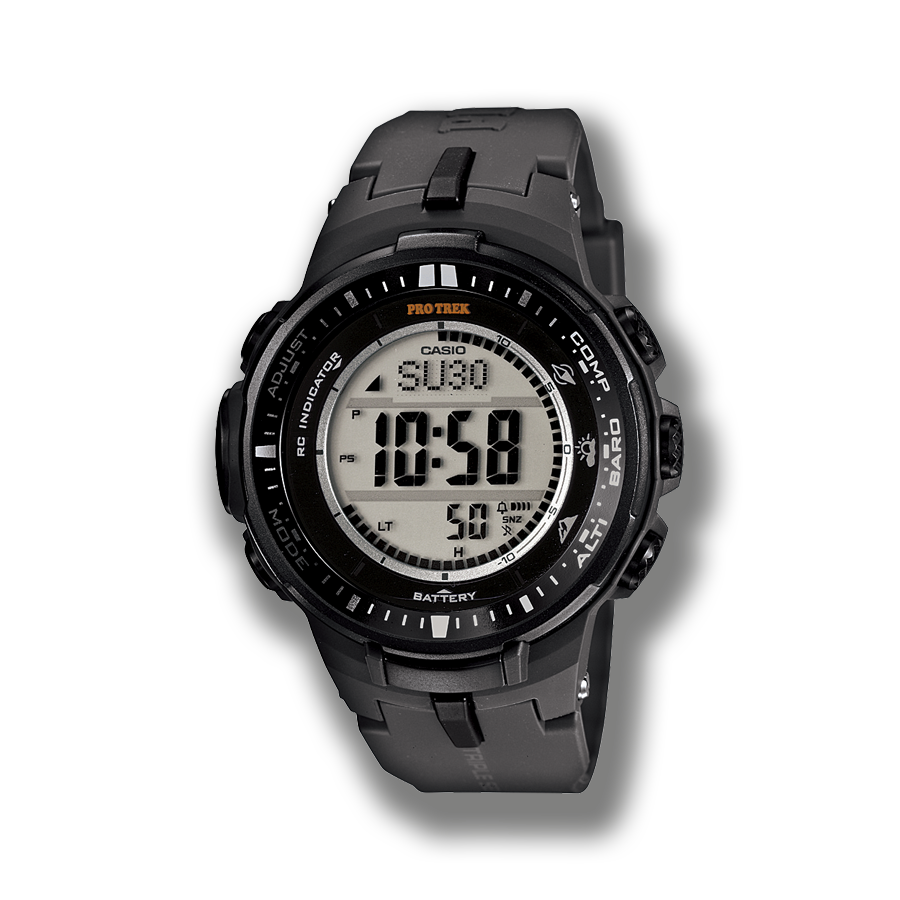
PRW-3000
Slim, compact form equipped with Triple Sensor Ver. 3
Technology developed for PRO TREK

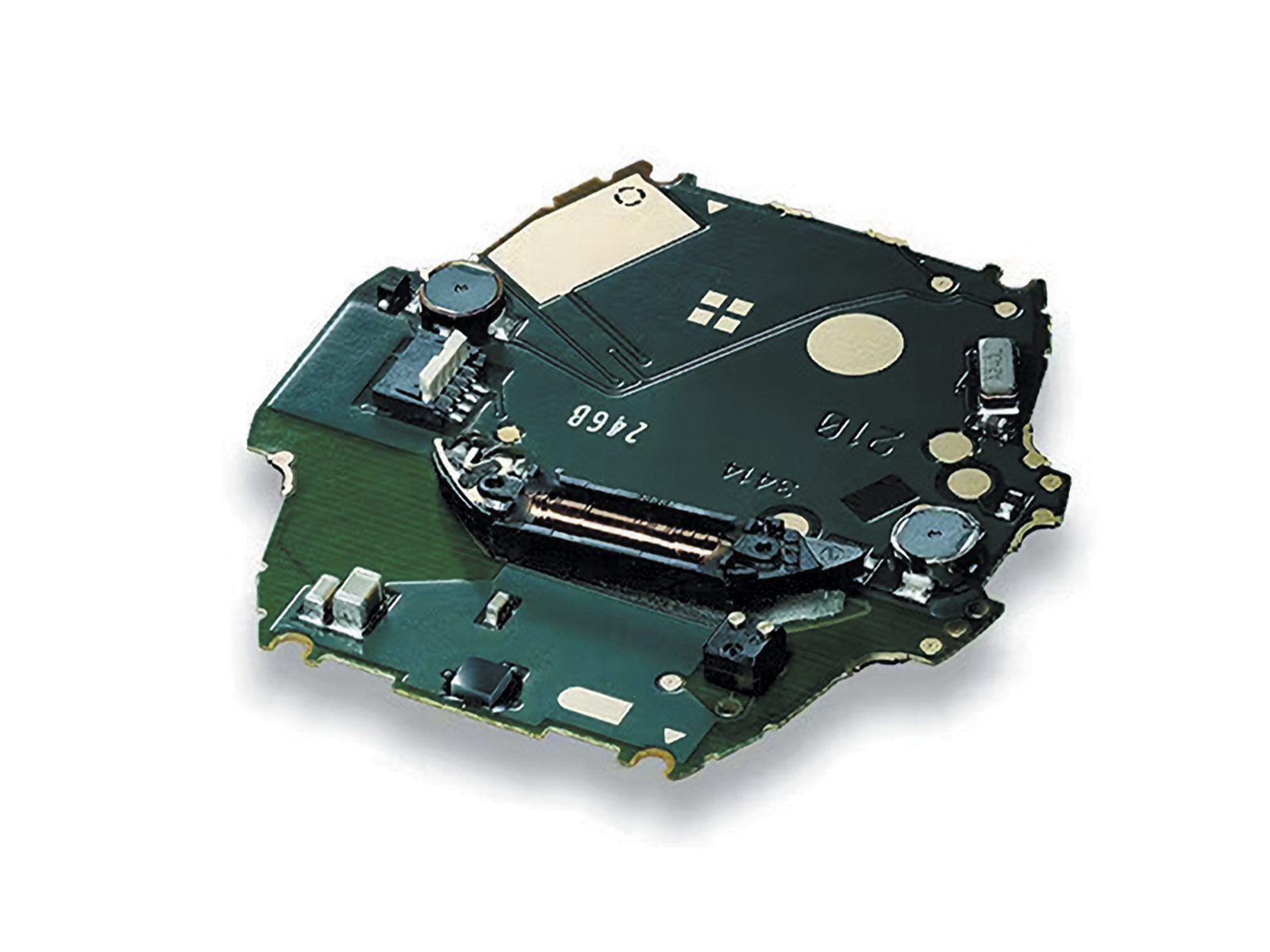
Triple Sensor Ver. 3
Dramatic downsizing and enhanced precision
The second update to Triple Sensor technology introduced a newly developed magnetic sensor, 95% smaller than its predecessor, along with a pressure sensor with enhanced accuracy. This combination, along with original Casio sensor integrated circuits, delivered significant enhancements to Triple Sensor functionality, including 1-meter altitude measurements and 60-second continuous compass bearing measurements.
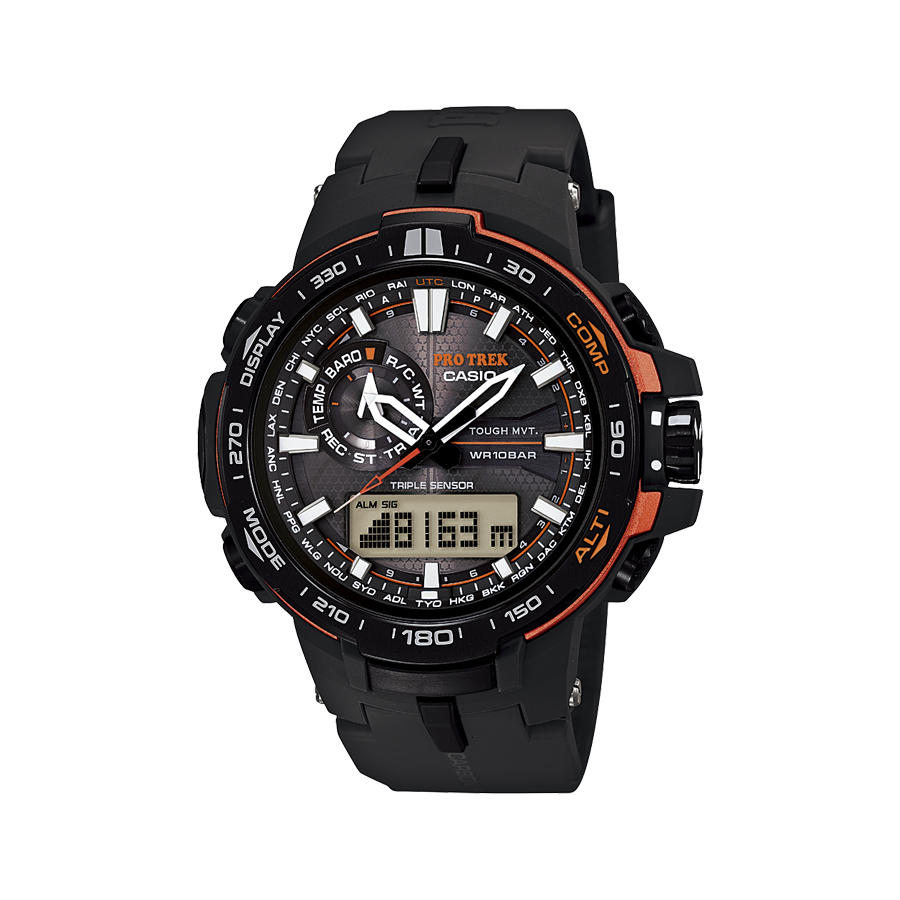
2014
PRW-6000
Analog-digital combination with built-in Triple Sensor Ver. 3
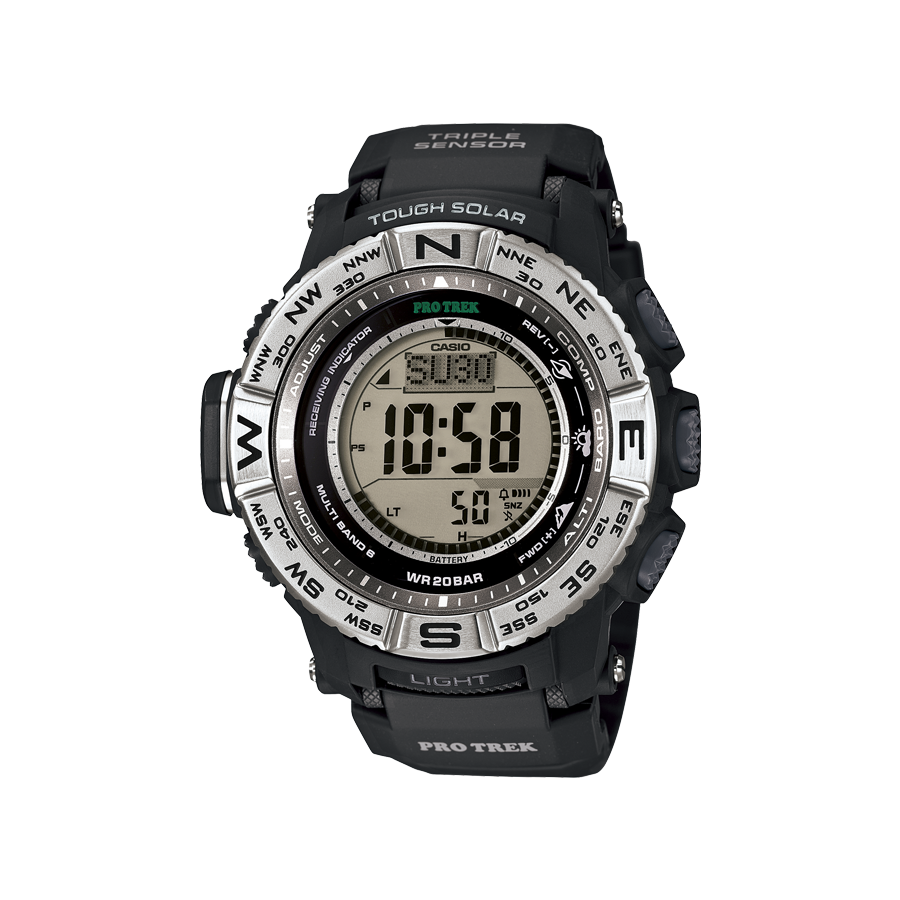
2015
PRW-3500
Triple Sensor Ver. 3 + water resistance up to 200 meters
2015
Professional quality
In pursuit of the ultimate in functional beauty
Under the supervision of Hirotaka Takeuchi, the first Japanese climber to summit all 14 of the world's mountains over 8,000 meters, a new timepiece with enhanced technical specs and overall quality was introduced to the MANASLU line, now firmly established as the flagship of the PRO TREK brand. The PRX-8000T featured a wide, high-contrast face for visibility in extreme conditions, with a sapphire crystal and metal bezel for durability. Driven by Takeuchi’s focus on wearability, the watch included an adjustable clasp, easy to change even while wearing gloves. Titanium carbide and diamond-like carbon (DLC) coatings on the metal components added a refined finish, making this MANASLU model the highest-performing and most sophisticated timepiece in the line.
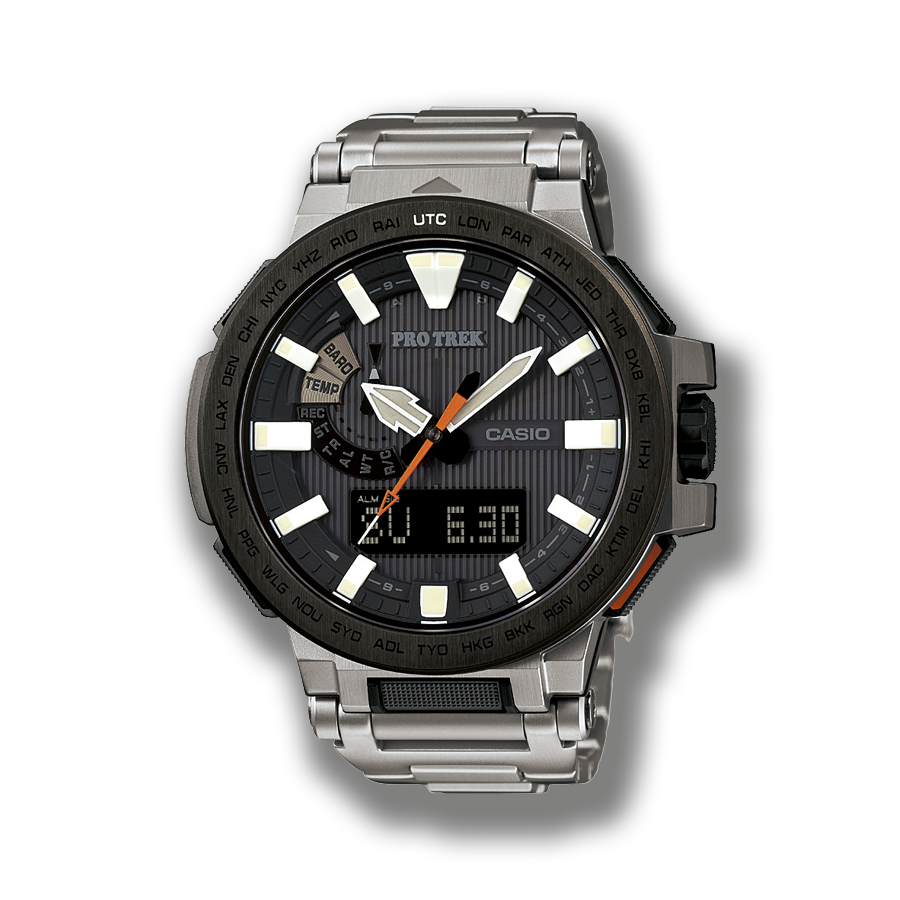
PRX-8000T
MANASLU equipped with Triple Sensor Ver. 3
PRO TREK AMBASSADOR
Professional climber
Hirotaka Takeuchi
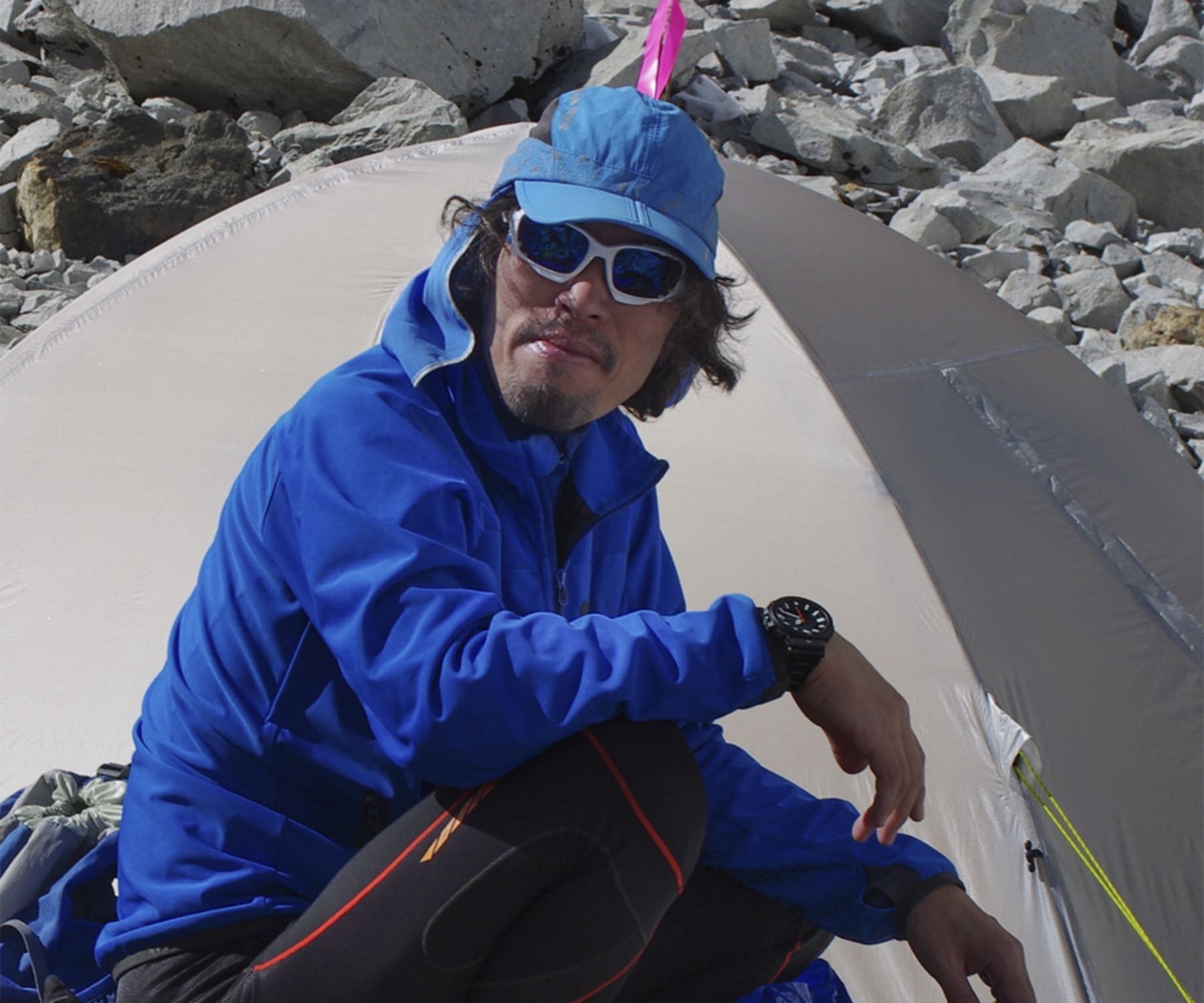
Firsthand experience of climber who summited all 14 8,000-meter peaks informs Manaslu design
Takeuchi is a professional climber known for his alpine style of summiting in small, lightly equipped teams. A PRO TREK ambassador since 2004, he has assisted in the development of major PRO TREK models over this time. He provided extensive feedback on Manaslu performance, based on what he was looking for when attempting to summit 8,000-meter peaks. Climbing together with the intrepid Takeuchi, PRO TREK continues to evolve in its own unique way as a brand of essential, authentic outdoor gear.


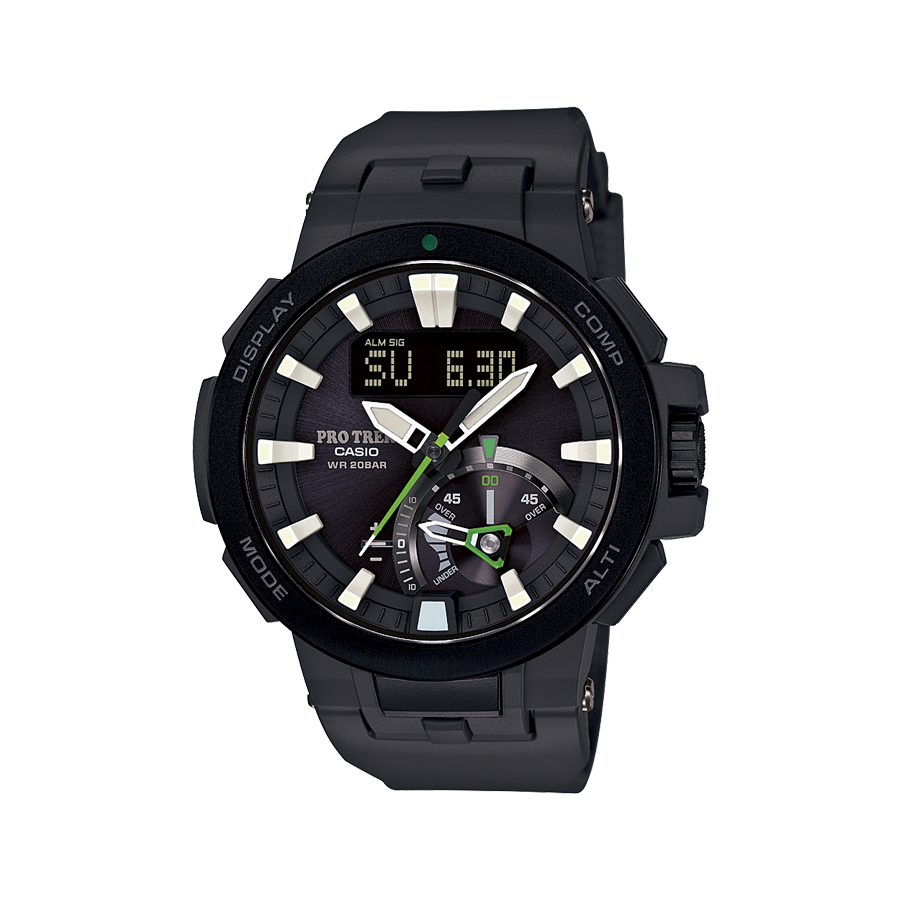
2016
PRW-7000
Digital compass with auto horizontal compensation
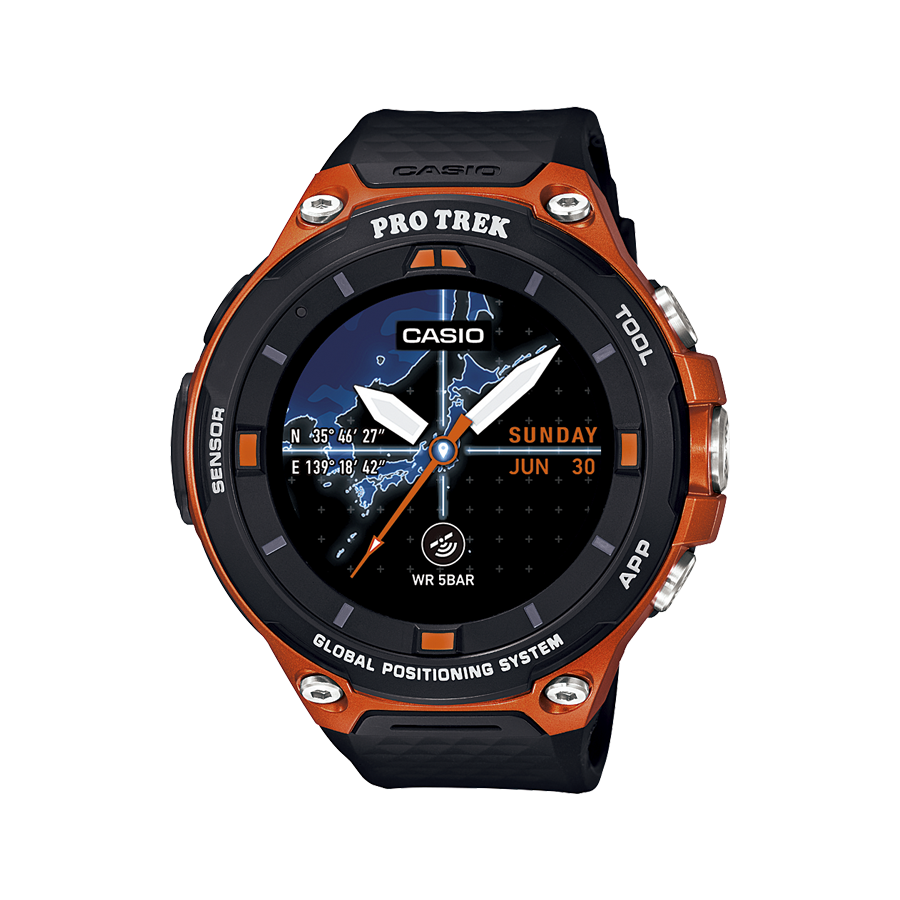
2017
WSD-F20
First PRO TREK smartwatch
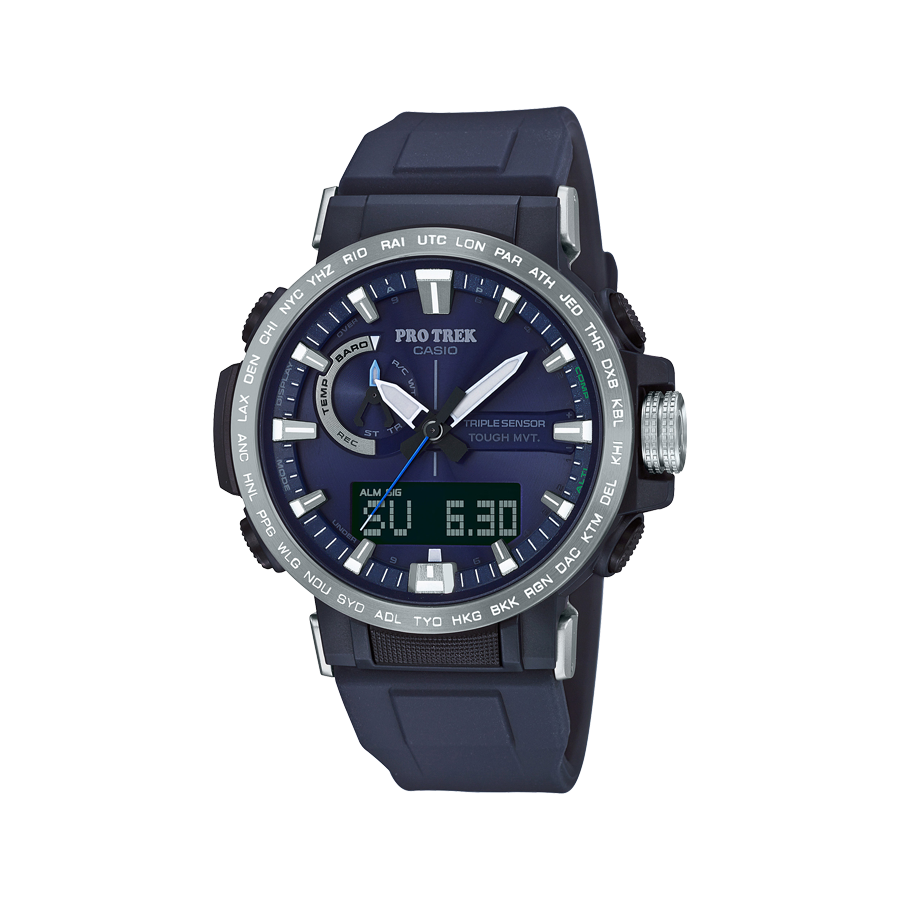
2018
PRW-60
Slimmed-down analog-digital combination
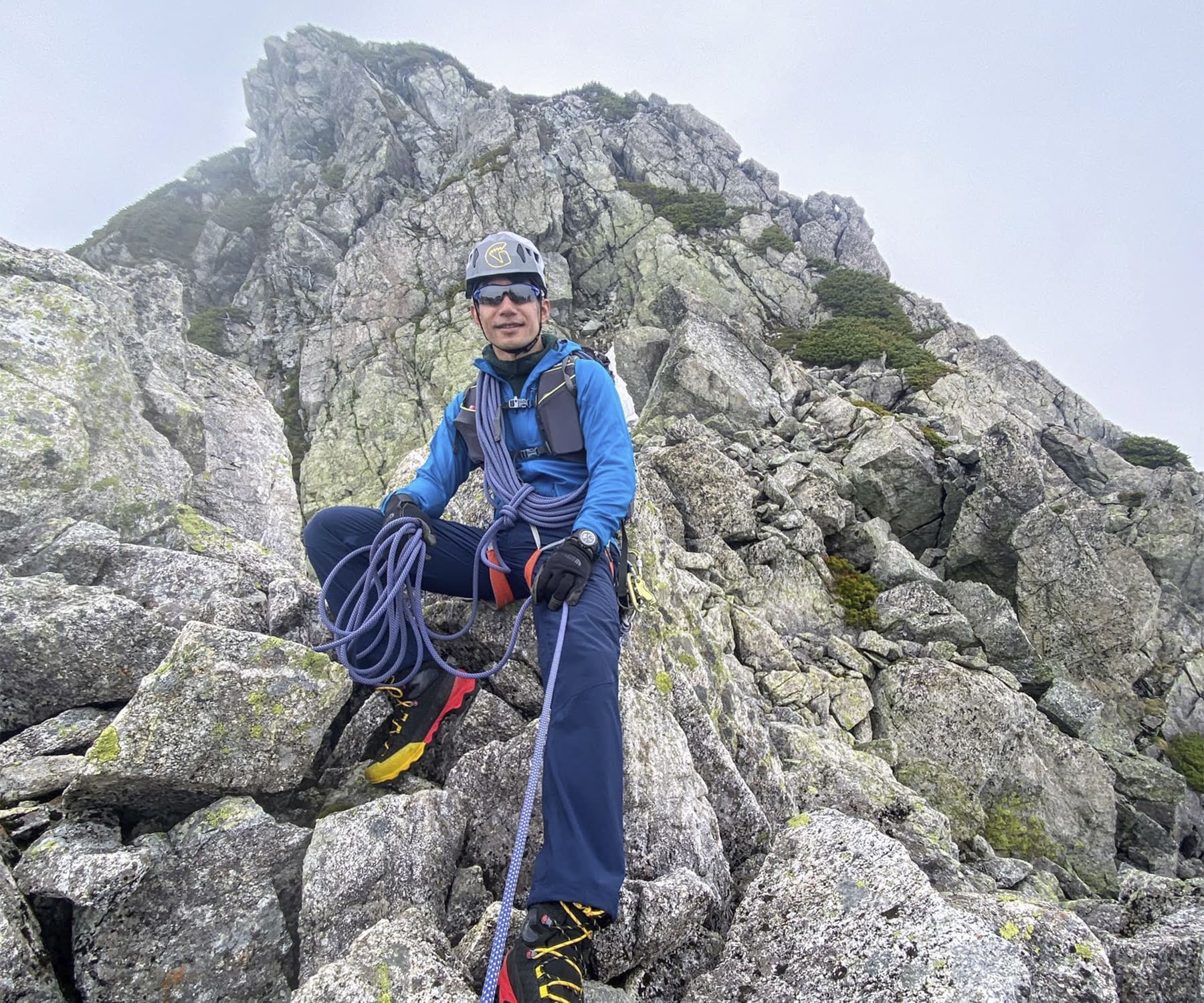
PRO TREK AMBASSADOR
Climber
Yasuhiro Hanatani
Intense focus on practicality and design
From his home base at Mt. Kaikomagatake, where he works as a mountain guide, Hanatani is active both in Japan and abroad. The PRW-60, a significantly slimmed-down watch equipped with Triple Sensor that also features an urban-style analog display, reflects Hanatani’s emphasis on practicality and design.


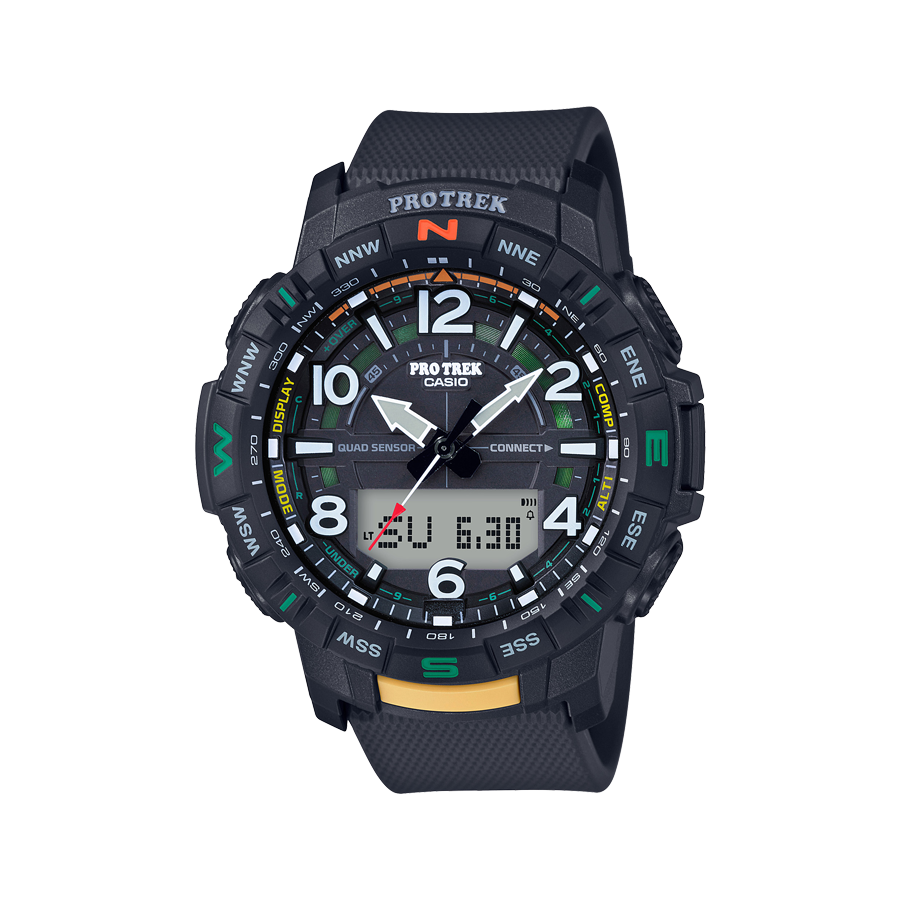
2019
PRT-B50
Quad sensor (magnetic, pressure, temperature, and accelerometer) + Mobile Link
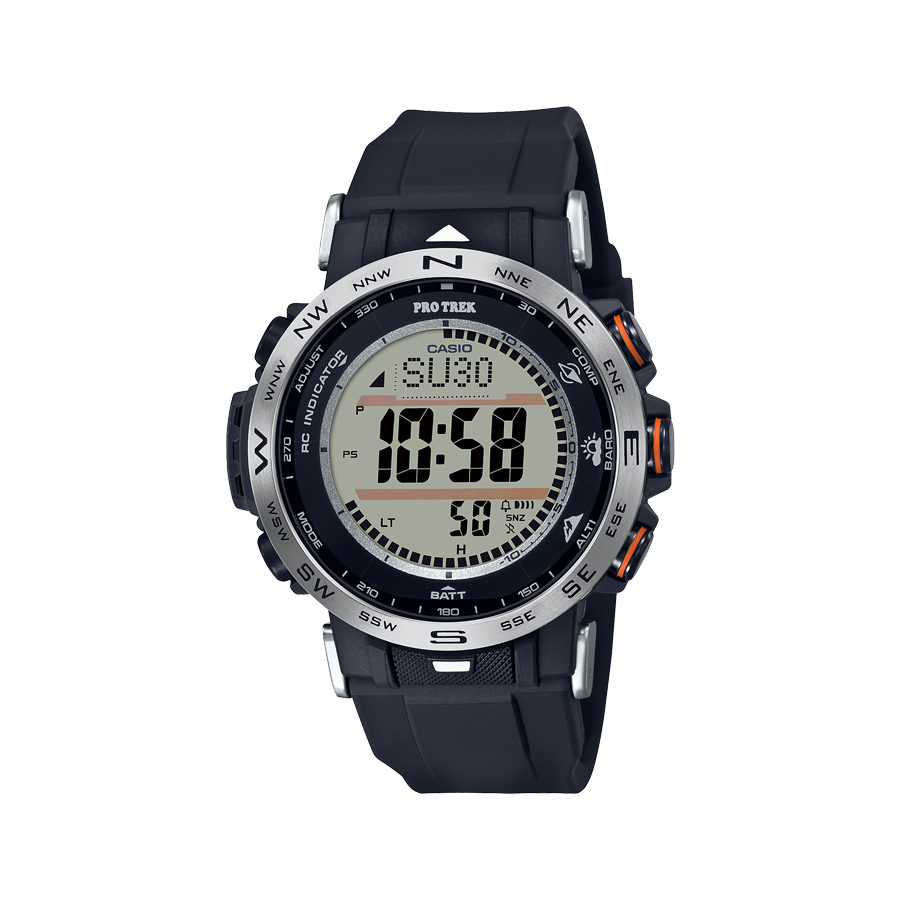
2020
PRW-30
Easy-to-read, easy-to-use, compact
PRO TREK AMBASSADOR
Adventure racer
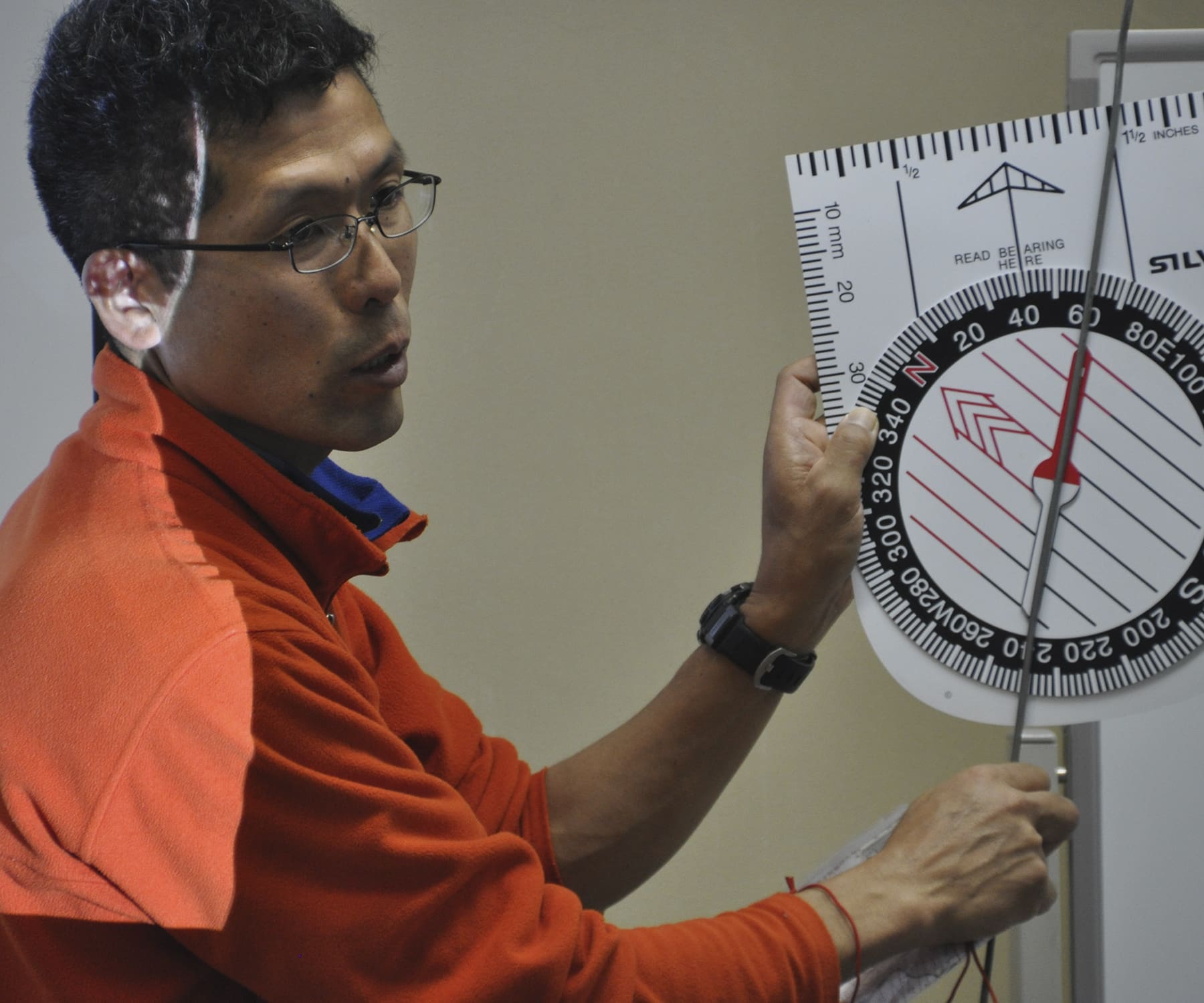
Masato Tanaka
Precision measurements enable precise action
Japan’s leader in adventure racing, Tanaka has a long track record of success in numerous international competitions. The one-second, one-meter interval altimeter, bearing memory and other technologies of the PRW-30 were adopted after being trialed in numerous Tanaka races.


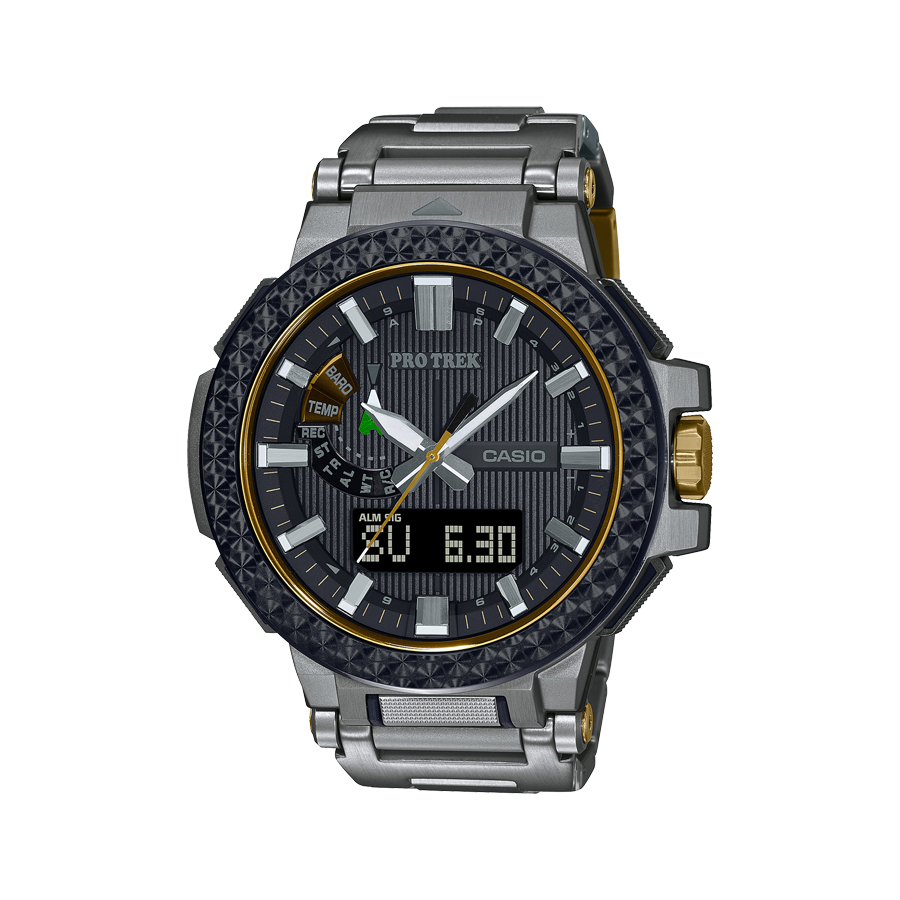
2020
PRX-8025HT
PRO TREK 25th Anniversary Manaslu
2022
Nature-minded crafting
An outdoor brand in step with the times
In 2022, PRO TREK added a focus on promoting a deeper connection with nature. This included developing watches with key resin components made from plant-derived, renewable bio-based materials, and expanding the lineup of models equipped with Tough Solar technology, harnessing natural sunlight for power. Embracing a nature-conscious approach, the PRO TREK tagline was also updated from “Feel the Field” to “One with Nature,” marking a new beginning as an outdoor brand committed to helping users experience, enjoy, and preserve the natural world.

2022
First use of bio-based resin
Guiding outdoor lifestyles in a positive direction
The PRW-61 upholds the signature outdoor features of PRO TREK, such as Triple Sensor, radio-controlled, and solar-powered functionality, while making the case, band, and case back with bio-based resin — a material which is expected to help reduce environmental impact. This advancement underscores a deep connection to nature, essential for any outdoor gear. Designed with a compact size that suits any wrist, the watch combines rugged function with contemporary style, making it perfect for both outdoor adventures and urban settings. The PRW-61 has become a new classic for those who live and breathe outdoor living in their own unique way.
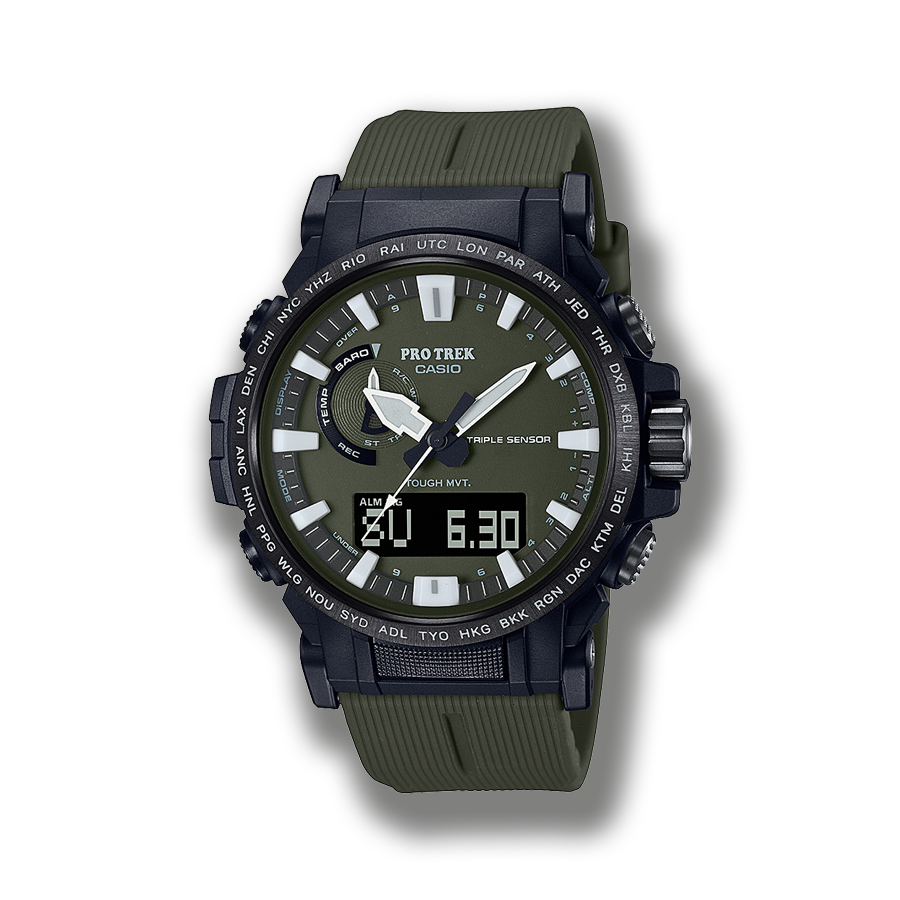
PRW-61
First PRO TREK made with bio-based resin
Technology developed for PRO TREK

Bio-based resin
A material expected to help reduce environmental impact
Produced from renewable organic resources, bio-based resin is attracting attention as a material widely thought to help reduce environmental impact by curbing CO₂ emissions. PRO TREK watches employ bio-based resin made from materials extracted from castor seeds and corn.

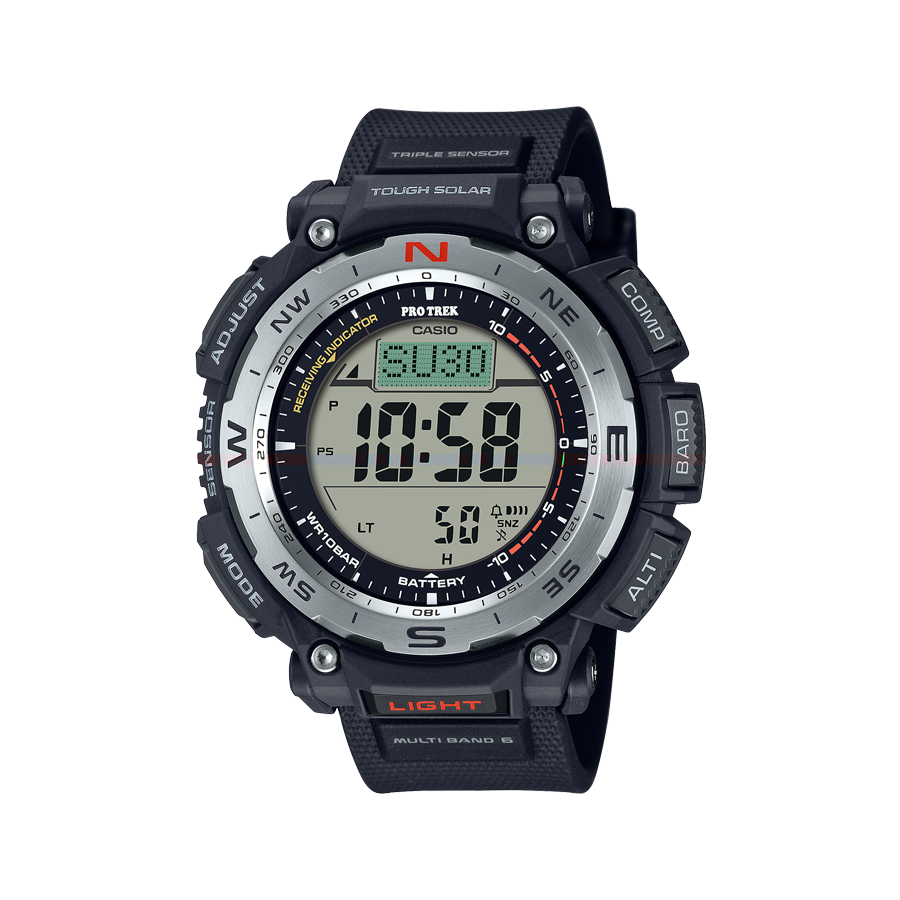
2022
PRW-3400
Large-screen dual-layer LCD
Made with bio-based resin
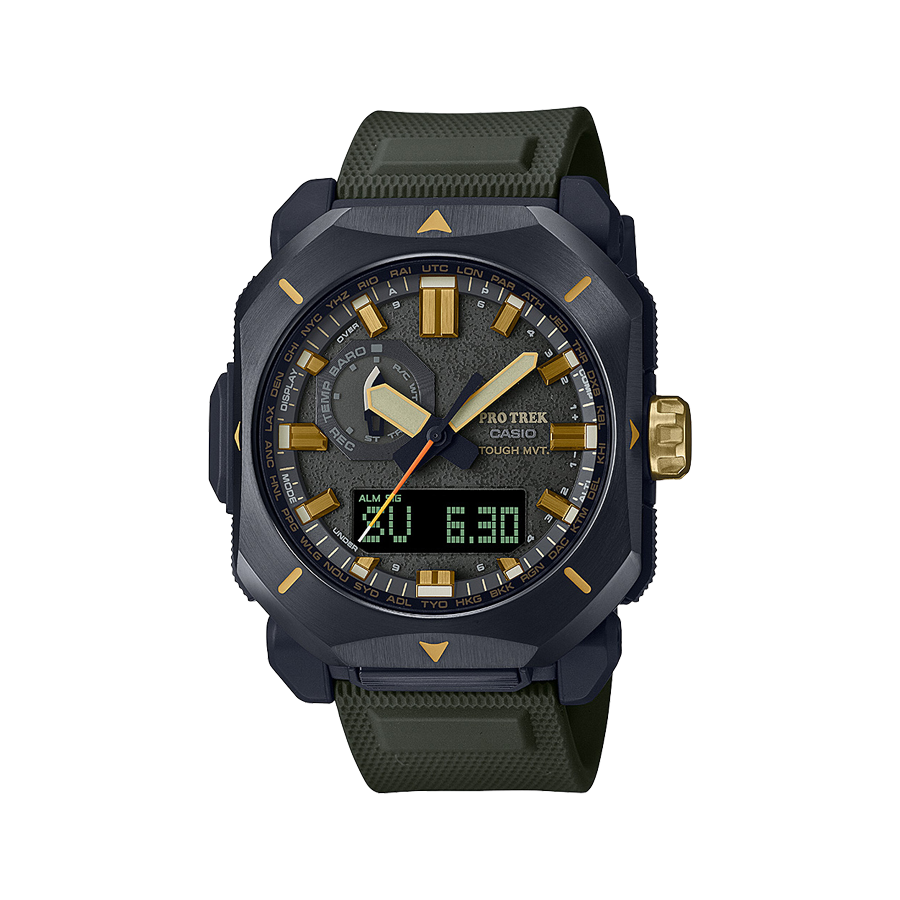
2022
PRW-6900
Angular form with wild outdoor style
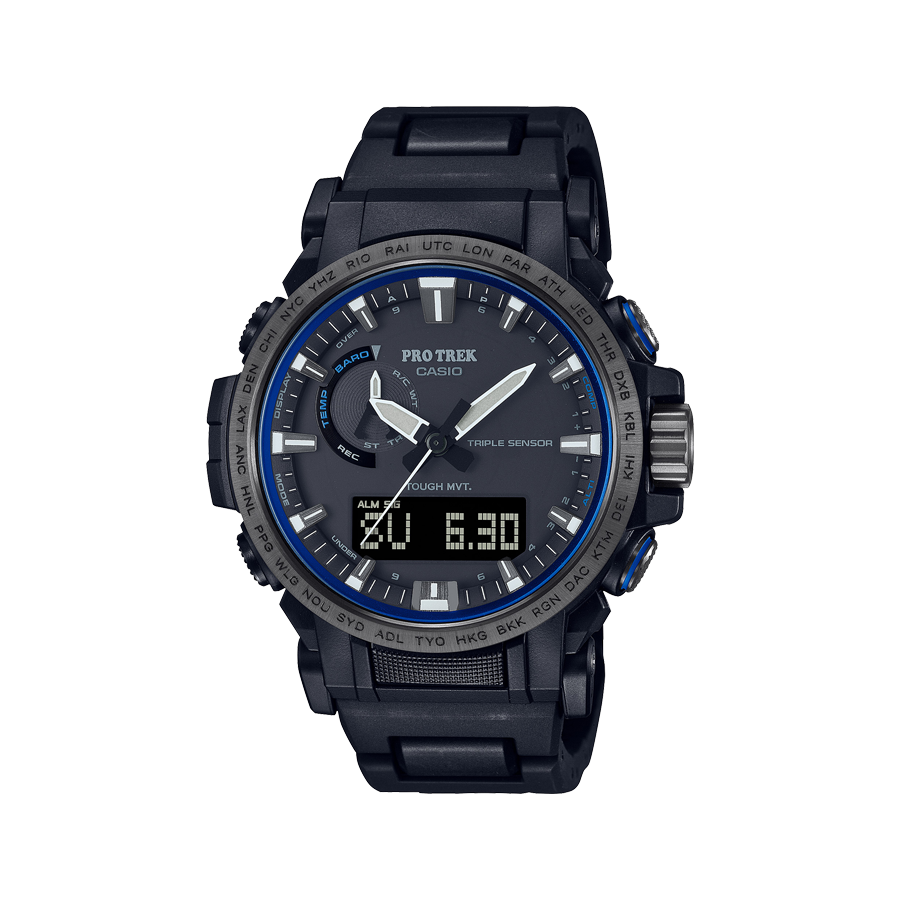
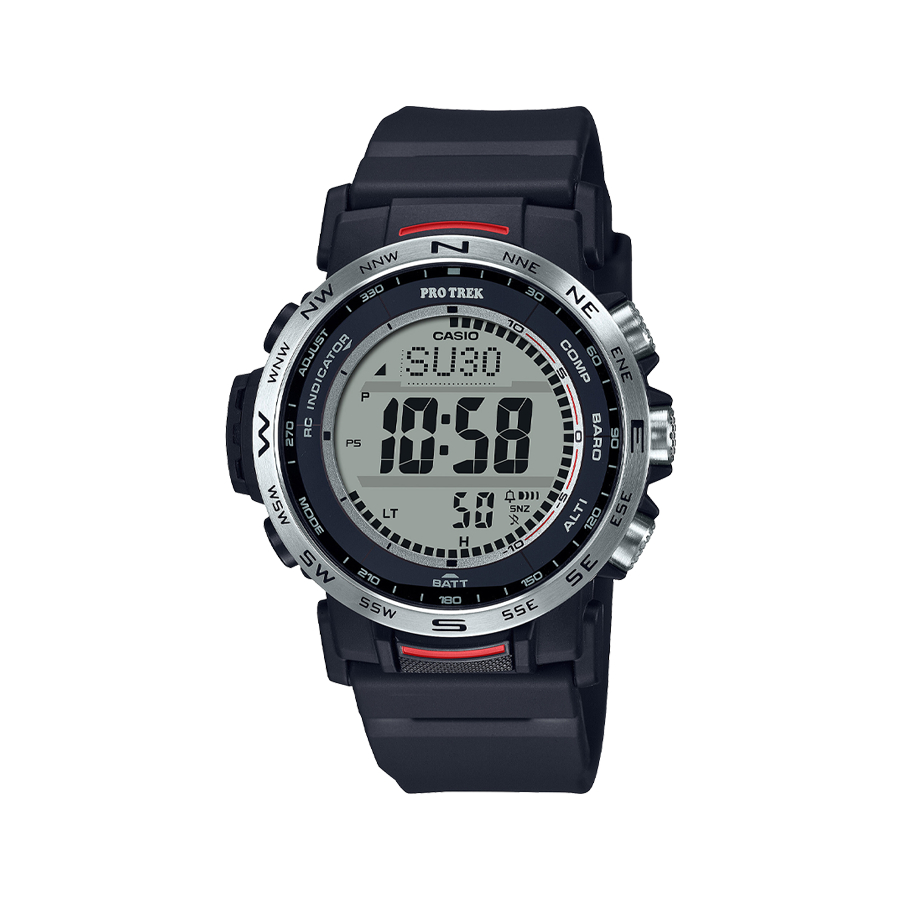
2023
PRW-61FC
Field Composite Band made with bio-based resin
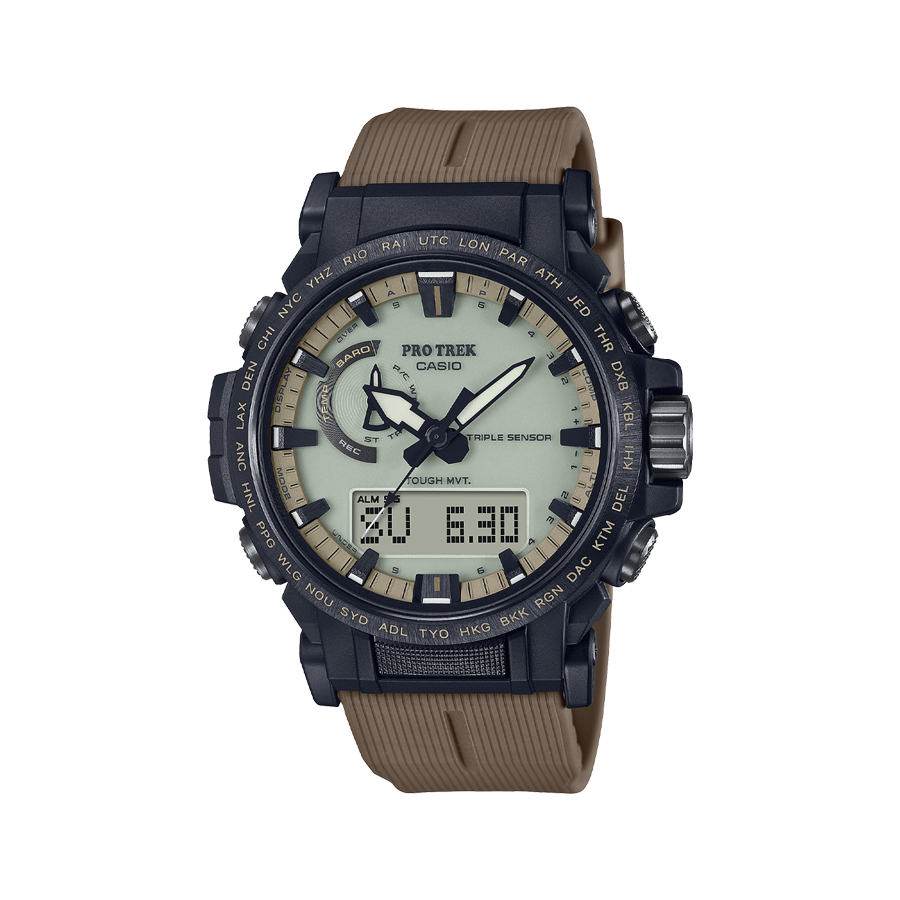
2023
PRW-35
Compact profile in bio-based resin
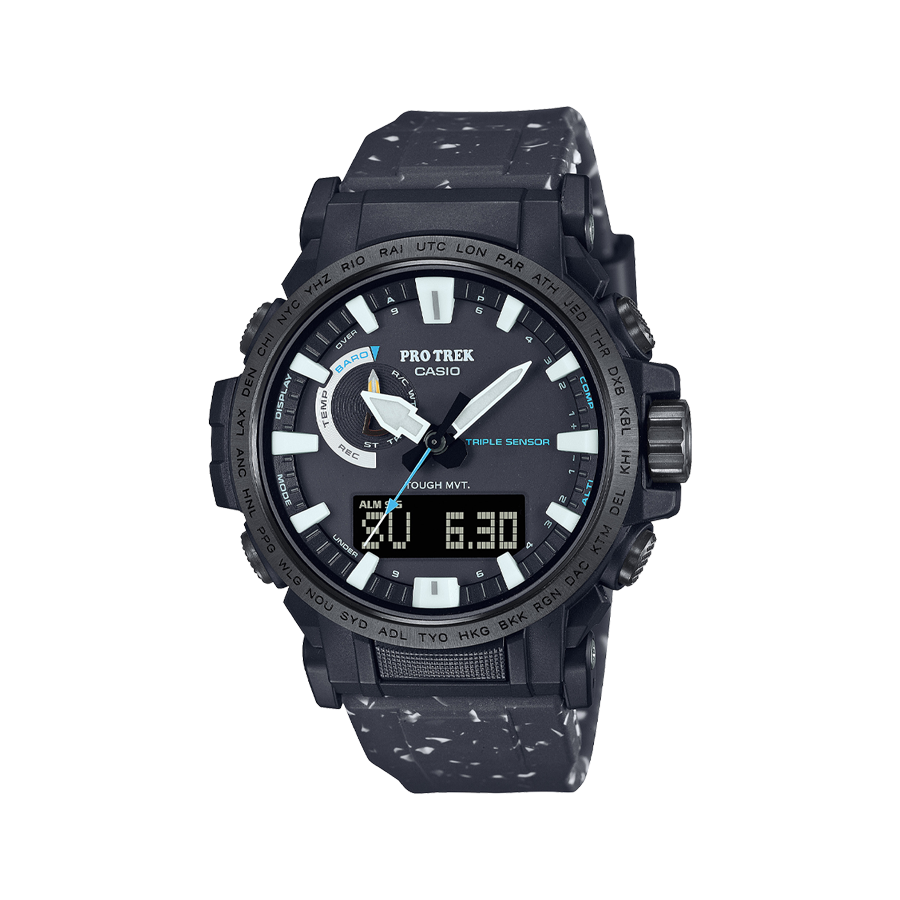
2023
PRW-61LD
Full-screen phosphorescent solar dial in bio-based resin
2024
PRW-61NJ
Nature Conservation Society of Japan collaboration
2024
Use of recycled materials
Exploring new sustainable options
The PRG-340SC features a highly comfortable Dura Soft band made with recycled resin. Scraps from resin product manufacturing are crushed into chips, kneaded into a silicone base, and transformed into vibrant, randomly patterned textures that evoke the rugged beauty of stones and sand. The bezel, case, and case back are made with bio-based resin, reflecting a commitment to sustainability. With Triple Sensor functionality for tracking natural conditions and Tough Solar charging that converts light from the sun and indoor sources into power, this watch helps users enjoy and connect with nature through materials and features built for authentic outdoor gear.
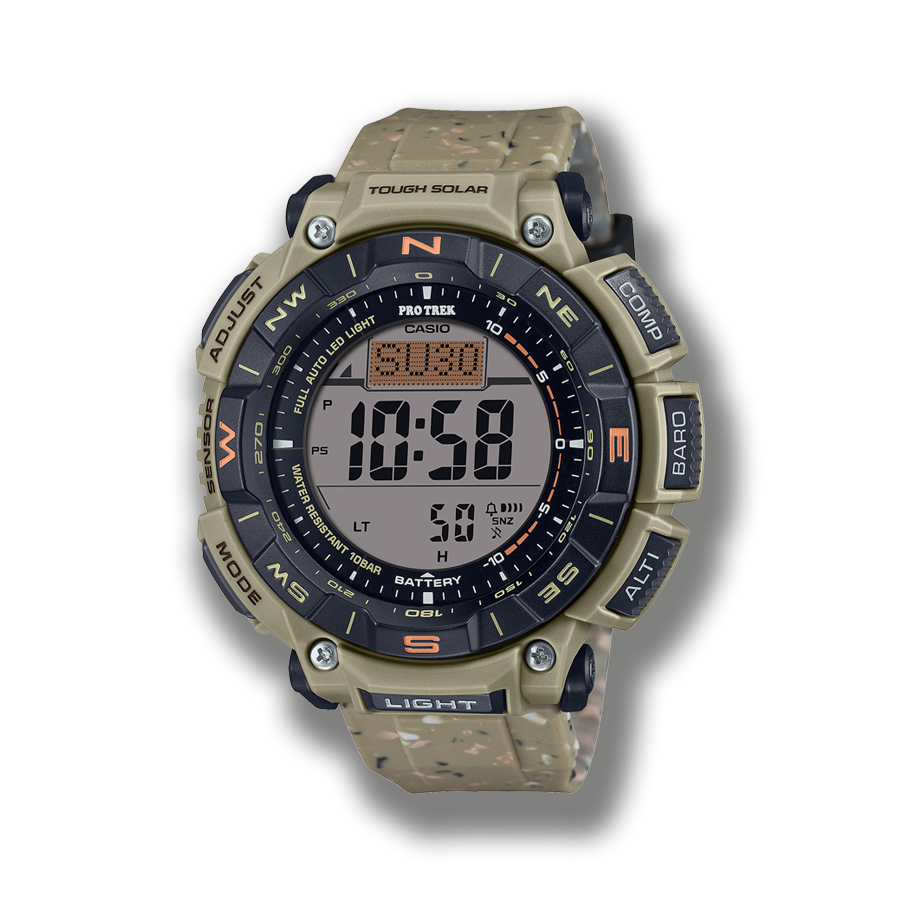
PRG-340SC
Band made with reused silicone resin materials
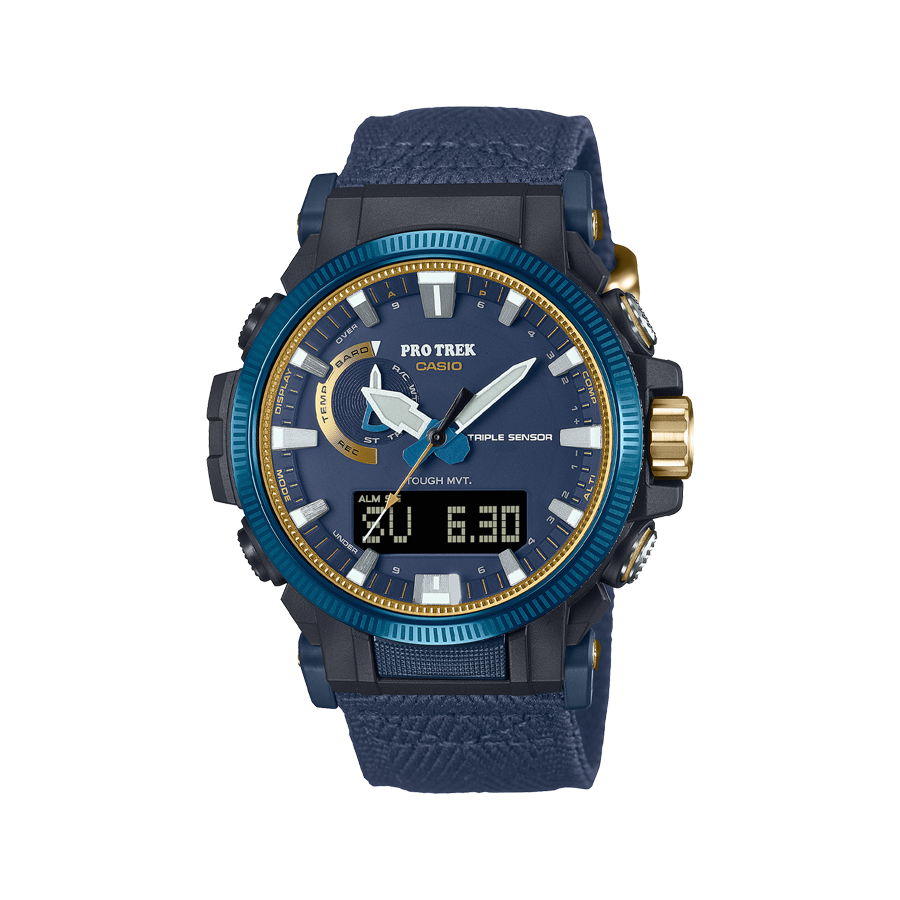
2024
PRW-61SS
Casio watch 50th anniversary model
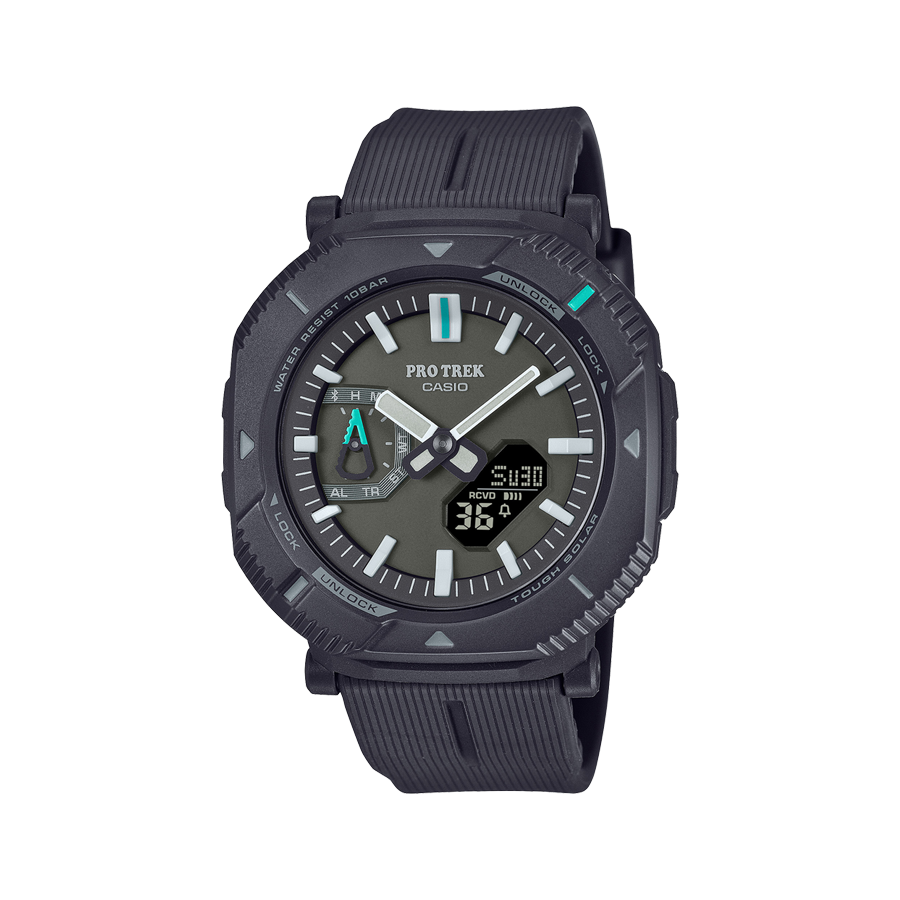
2024
PRJ-B001
Hiker Line with built-in Mobile Link
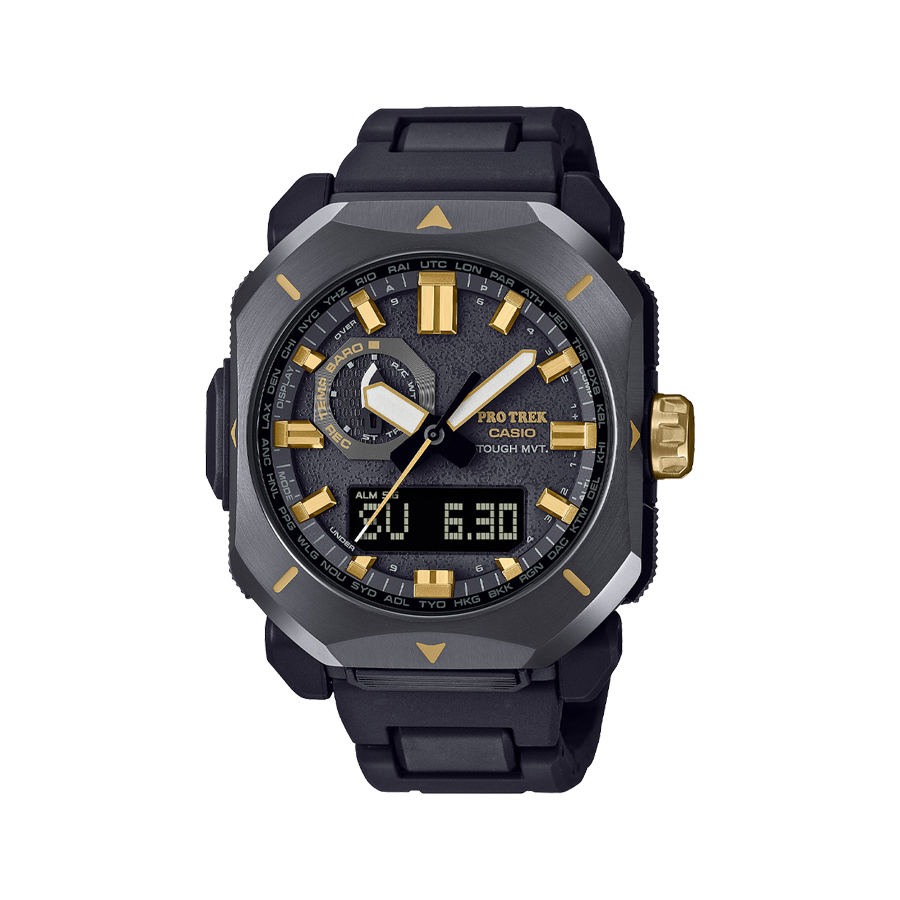
2024
PRW-6900ZE
Casio watch 50th anniversary model
2025

Honoring connections with people and with nature
Outdoor gear committed to ongoing evolution
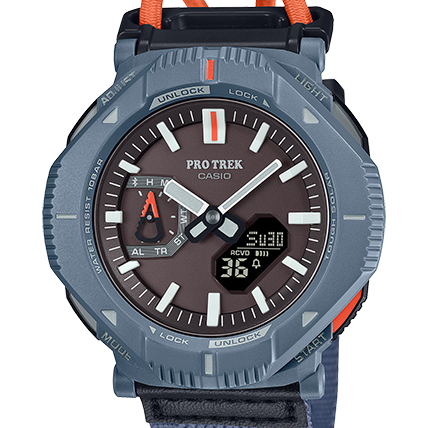
The PRG-340B features bio-based resin in key resin components and CASTLON®, a 100% plant-derived nylon material, for the cloth band. The band is treated with flame retardant, making it resistant to burn marks from campfire sparks. With a design and colors tailored for outdoor gear and a focus on environmentally responsible materials, the watch embodies the PRO TREK “One with Nature” commitment. As PRO TREK celebrates its 30th anniversary, this timepiece highlights the brand’s ongoing evolution and dedication to fostering a deep connection with both people and nature.
* CASTLON® is a registered trademark of Unitika Ltd.
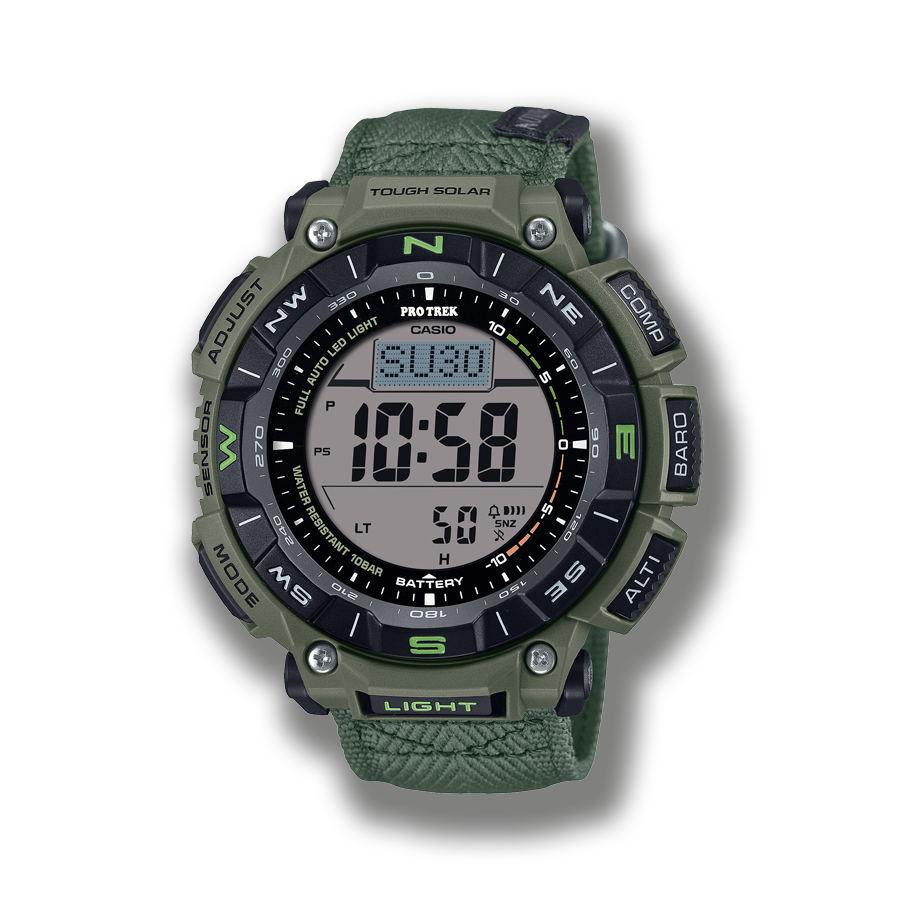
PRG-340B
Band made with plant-derived CASTLON®
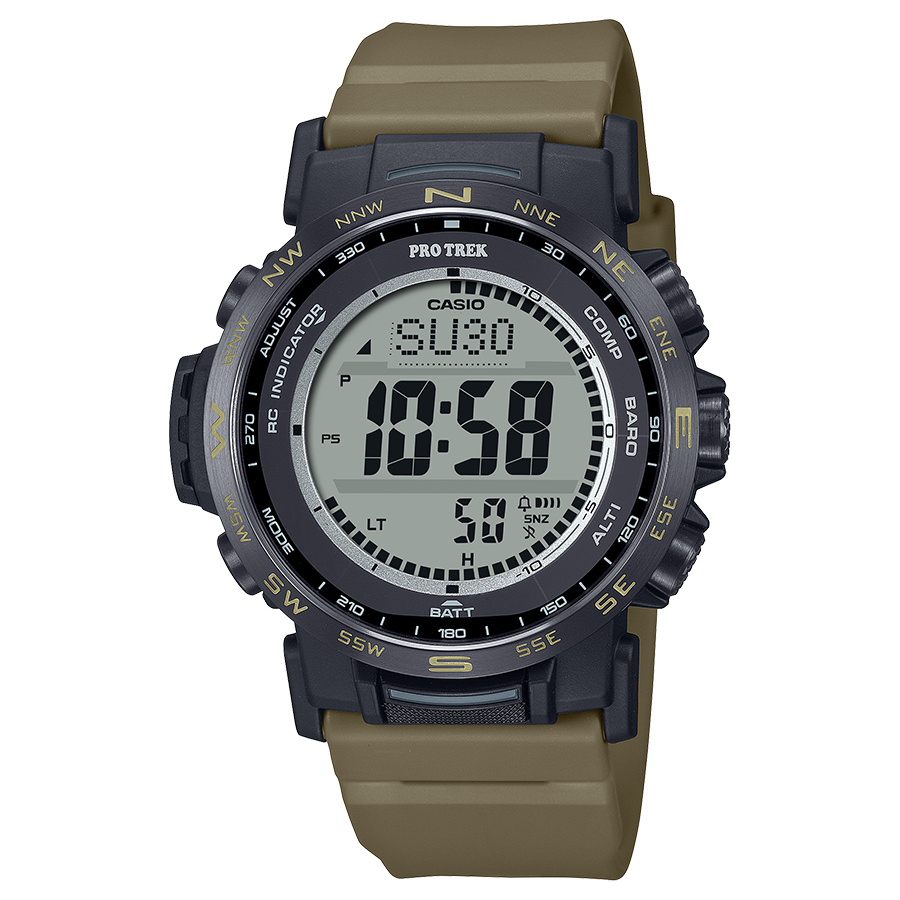
2025
PRW-35LD
Phosphorescent LCD digital watch