




















“Akiko’s Piano” Digital Instrument Sound Project
Memory Spoken Through Sound, A Future Linked by Resonance
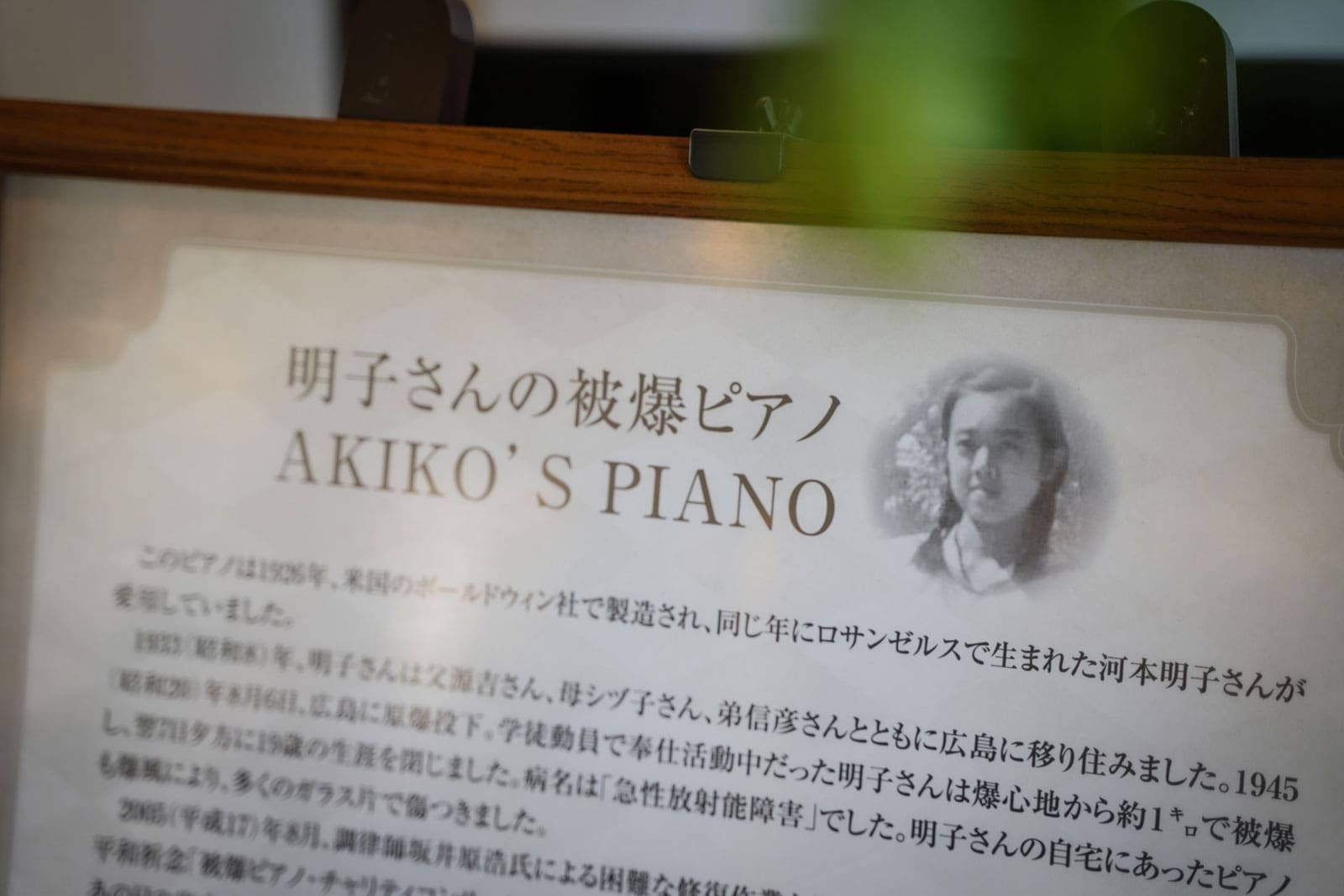
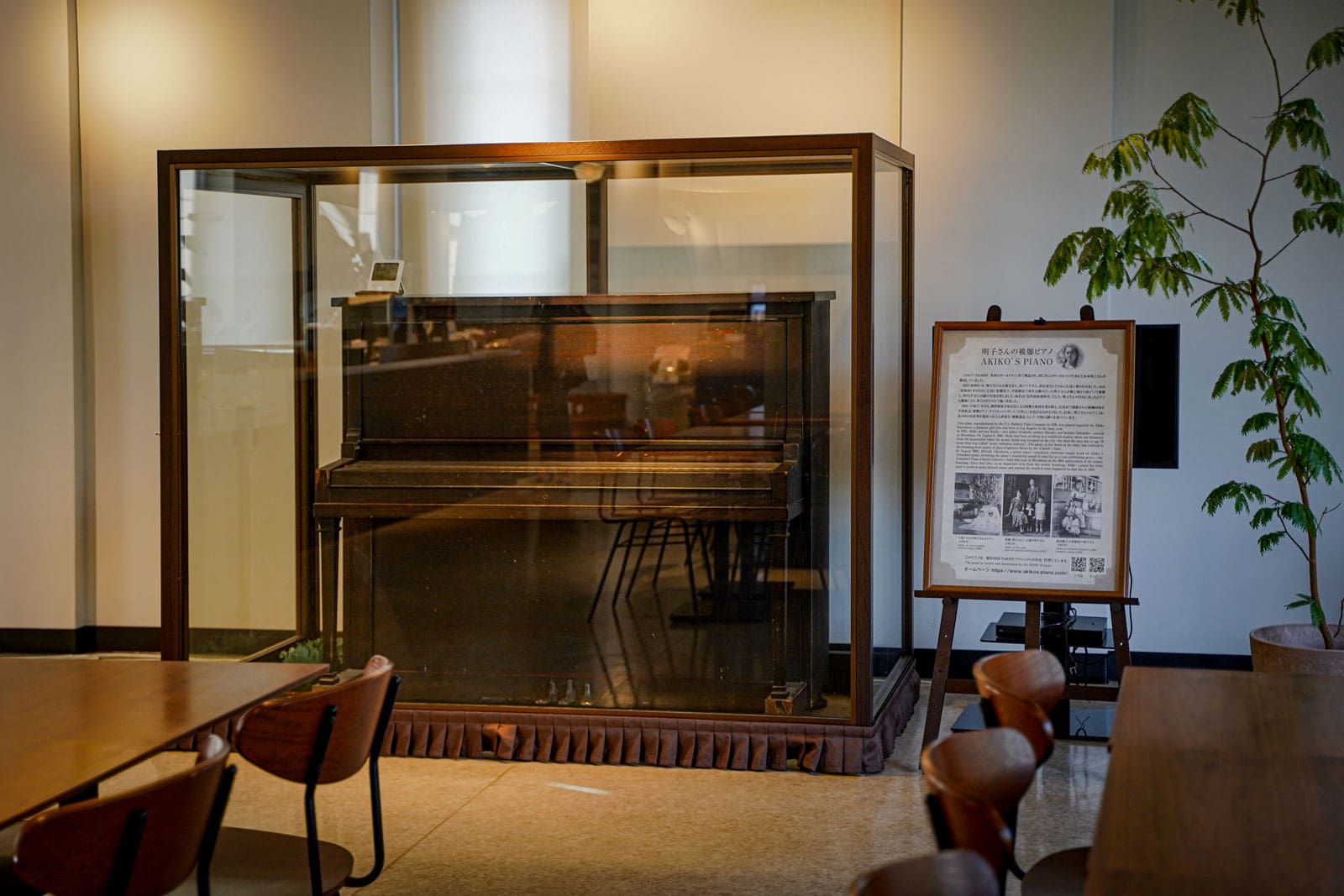
The Hiroshima City Peace Memorial Park Rest House is home to an upright piano that has come to be known as Akiko’s Piano. It was built in 1926 and once belonged to Akiko Kawamoto, a resident of Hiroshima during that period.
The piano was damaged during the atomic bombing which took place on August 6, 1945. It has since been restored in 2005 and has been carefully preserved and cared for up until the present day.
Throughout the years many famous musicians have experienced playing it, including world-renowned pianist Martha Argerich. Thanks to both its sound and its place in history, the piano has come to embody a message of peace.
On October 15th 2025, a new project has been undertaken, following on from the Music for Peace: 80th Anniversary of the Atomic Bombing – Akiko’s Piano Benefit Concert, which featured Martha Argerich, Akane Sakai and Hayato Sumino.
The “Akiko’s Piano” Digital Instrument Sound Project aims to preserve the piano’s sound for the future.
This article recounts the journey the piano has taken and the story behind its digital preservation, told through the voices of those involved in the project.
When the Piano Spoke
Akiko’s Piano has been kept alive through performances from many different pianists over the years. The meaning of its sound has only deepened over time.
Shoji Sato of KAJIMOTO is one of the instigators of this project. There was one moment in particular that made him acutely aware of the piano’s significance.
After a concert in Hiroshima, Martha Argerich asked if she could try the piano. She stayed behind afterwards at the venue and played it there for the first time.
She later reflected on this experience and shared her thoughts with us:
“This may sound strange, but it seems as if the piano has a love for Chopin. Perhaps Akiko loved Chopin and played it often. Maybe those memories live on in this piano. It’s a very special instrument.”
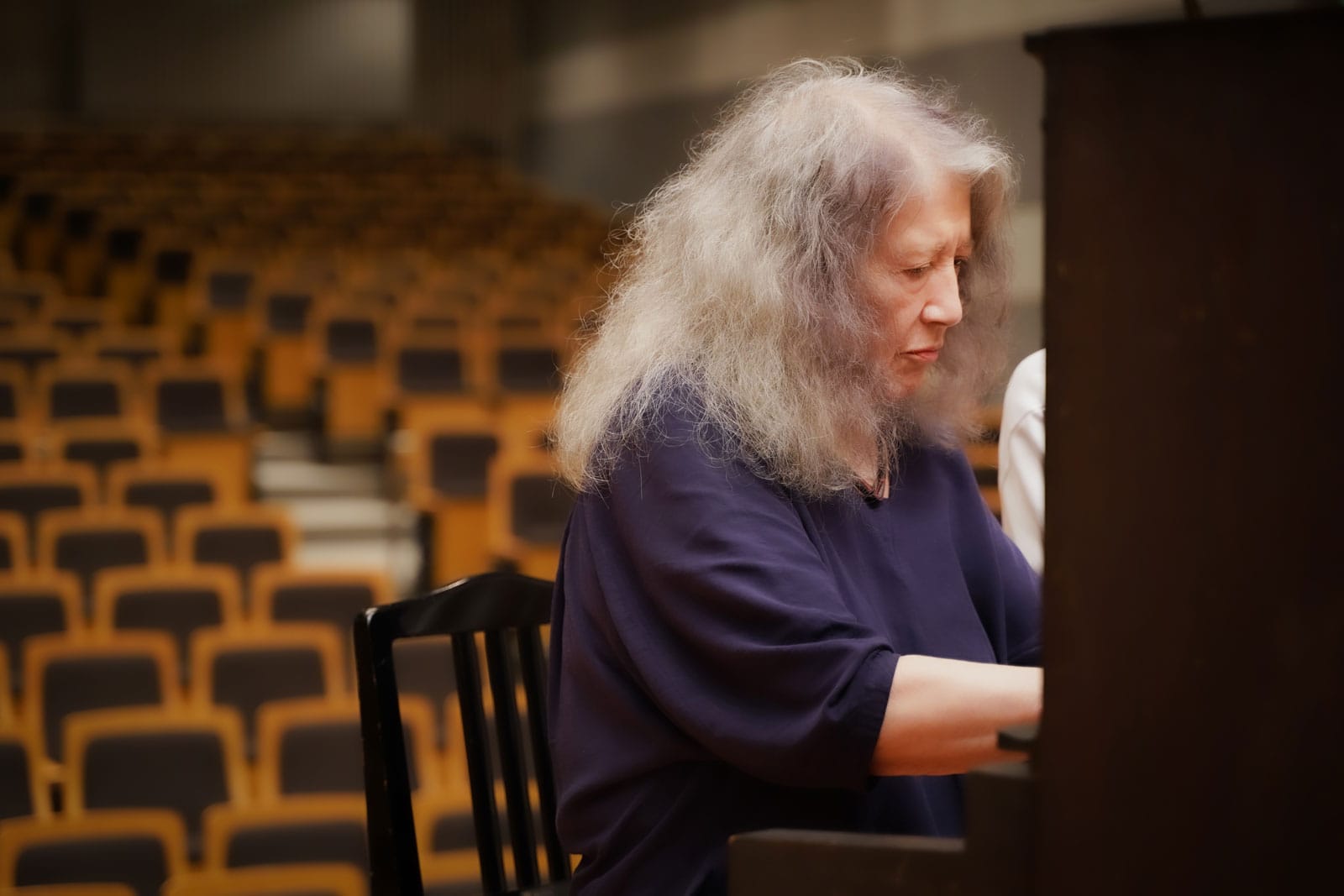
Martha Argerich is a musician who has encountered countless instruments around the world. Therefore, her comments about reflecting on the “memory” within the piano leave an even deeper impression.
This also help bring home the passage of time that is layered within its sound.
At that moment, the piano felt like much more than just a historical artifact.
It felt like a living object; one that contains memories and can communicate with people.
Preserving the Sound for the Future
Tomie Futakuchi is part of the HOPE Project and has been involved in preserving the legacy of Akiko’s Piano in Hiroshima. Regarding Akiko’s Piano, they had the following to say:
“When I first became involved in actively spreading musical activities throughout Hiroshima, I suddenly remembered Akiko’s Piano. I thought to myself, ‘It would be wonderful if we could preserve that piano too.’”
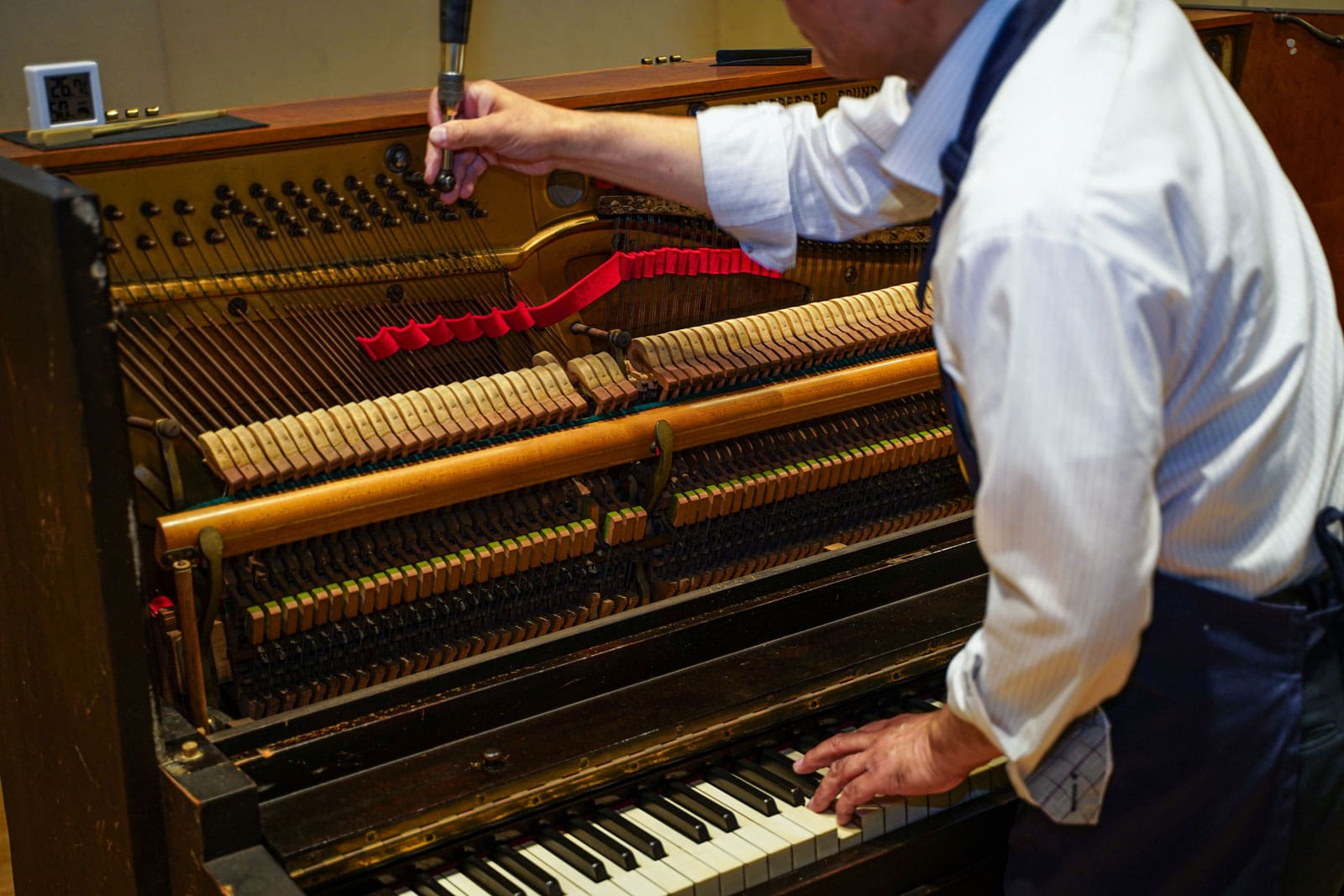
Piano tuner Hiroshi Sakaibara, who was directly involved in the restoration work of the piano itself, took that wish to heart.
When he first encountered the instrument about 22 or 23 years ago, it was not in a playable condition.
“I immediately felt that this was something that must never be thrown away. It was a piano that needed to be preserved and remembered.”
This instinctual feeling that it was something that needed to be protected, the accumulation of those feelings, as well as the actions that followed, resulted in the careful preservation of the piano through time.
But no matter how carefully it is treated, a physical instrument cannot remain in the same condition forever. An inevitable question eventually arises: “How can this sound be passed down to future generations?”.
Tomie recalls:
“Soon Akiko’s Piano will be nearly 100 years old. It’s difficult to preserve it in perpetuity, so I began to wonder if its sound could at least be passed on to future generations.”
Hiroshi had a similar opinion.
“I felt exactly the same way. There will come a time when the instrument reaches its physical limit. That’s why I had a strong hope that its sound could somehow be preserved. Digitally recording it therefore makes tremendous sense.”
The collective wishes of these individuals who had strived to protect this instrument gradually led to the emergence of a new idea; not just preserving the piano itself, but its sound.
This is where musical instrument manufacturer CASIO saw the possibility to make this dream a reality.
Casio Computer Co., Ltd.’s Tetsuro Ono, who was responsible for the project reflected:
“We felt we had been entrusted with providing the answer to an important question: What role can digital technology play in carrying this piano’s sound, as well as the history and emotions behind it—into the future? As a manufacturer of electronic musical instruments, we believe it is our responsibility to also pass on the culture of music to future generations. Helping to preserve this unique sound for the future is a deeply meaningful endeavor.”
It was at this moment that the desire to preserve Akiko’s Piano finally began to take concrete shape.
Capturing a Once-in-a-Lifetime Sound
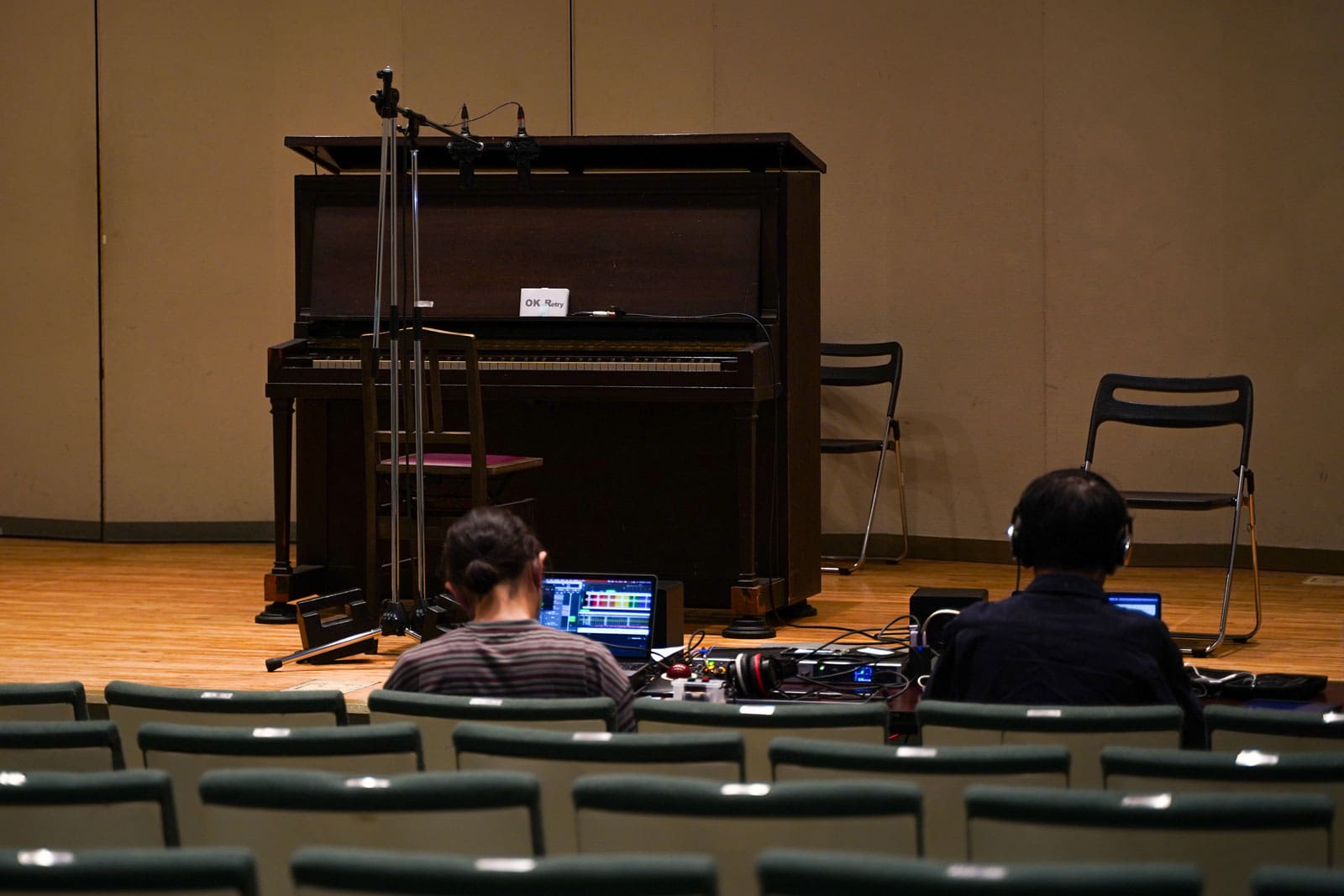
As the resolve to preserve Akiko’s Piano solidified, so did the practical realities of the situation and how challenges could be addressed. The most important question was “How should it be recorded?”.
Of course, an instrument that has been around for a hundred years carries many nuances and irregularities that cannot just be measured by modern standards alone. The person who faced these challenges head-on was sound engineer Akinobu Mukaedani.
“It’s a one-of-a-kind instrument that’s over one hundred years old. As soon as we began recording, I realized that this was a completely different instrument compared to modern pianos. That was the first major surprise.”
Recognizing this unique challenge meant starting from scratch, using a process of trial and error to determine the right approach.
“We had to determine the best way to capture the instrument. It was an extremely demanding process.”
Approximately 3,000 samples were recorded in Hiroshima. From these, the team carefully selected and refined the sounds—adjusting their resonance and texture—before reconstructing the final library of about 1,700 tones.
“But simply arranging the samples wasn’t enough,” said Mukaedani. “The transitions between sounds have to feel natural, or else it won’t work properly as a musical instrument. We paid particular attention to making sure that dynamic changes during performance felt natural.”
Using state-of-the-art technology, the team worked together to solve a problem that couldn’t be defined by numbers alone.
This was not merely a process of reproducing the sounds, but rather an effort to capture the very essence of the instrument.
Tetsuro describes the philosophy behind this approach:
“Inheriting the sound of an instrument that carries such a long history is not simply a matter of technical problem solving. We believed it was important to engage with the time period and the hopes and dreams that it embodies. Rather than simply making the sound ‘cleaner,’ our priority was to preserve the unique character that Akiko’s Piano has continued to develop over many years.”
Accurately replicating the sound alone was not the goal.
What mattered most was preserving what makes the piano unique.
That principle became the guiding philosophy that led the entire recording process.
What the Pianists Discovered
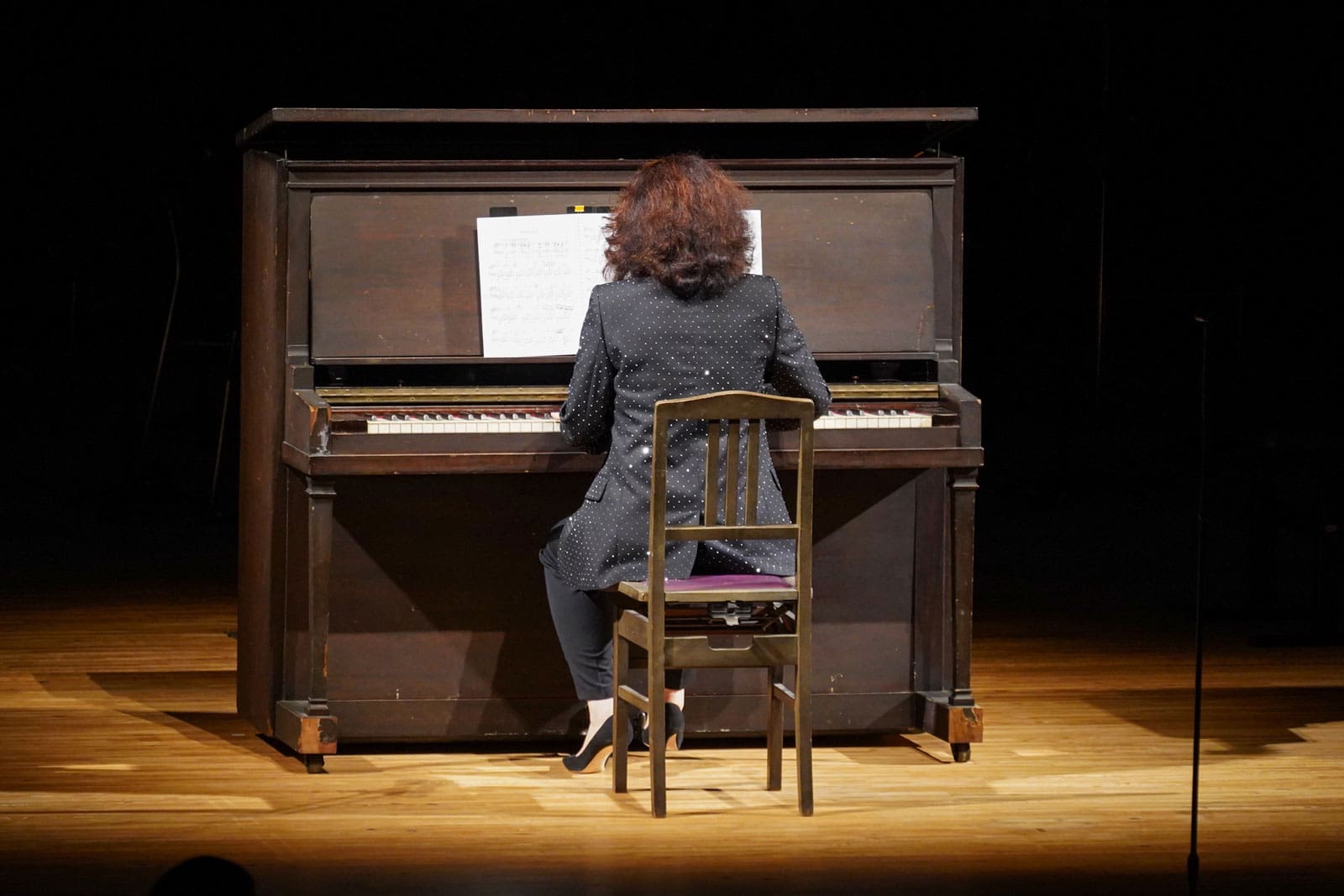
Whether or not all of this preparation would ultimately be worth it came down to a single moment. How would the sound resonate when heard on stage?
Pianist Hayato Sumino shared his thought as he reflected on the performance.
“I felt that the distinctive character of the sound had been captured very well. In fact, there were moments when I was playing it when its unique personality seemed to emerge even more clearly than from the original instrument itself. I found that incredibly fascinating.”
Pianist Akane Sakai was also a part of whole process throughout recording and editing and therefore experienced those changes firsthand.
“My first impression was that it was capable of producing far more tonal variation than I had imagined, this truly is a special piano. As we discussed with the team during the process, I shared feedback such as ‘I’d like a bit more of this in this register,’ and then the sound would change it within seconds. You could actually feel the sound improving in real time. Experiencing that sense of growth right in front of me was an entirely new experience.”
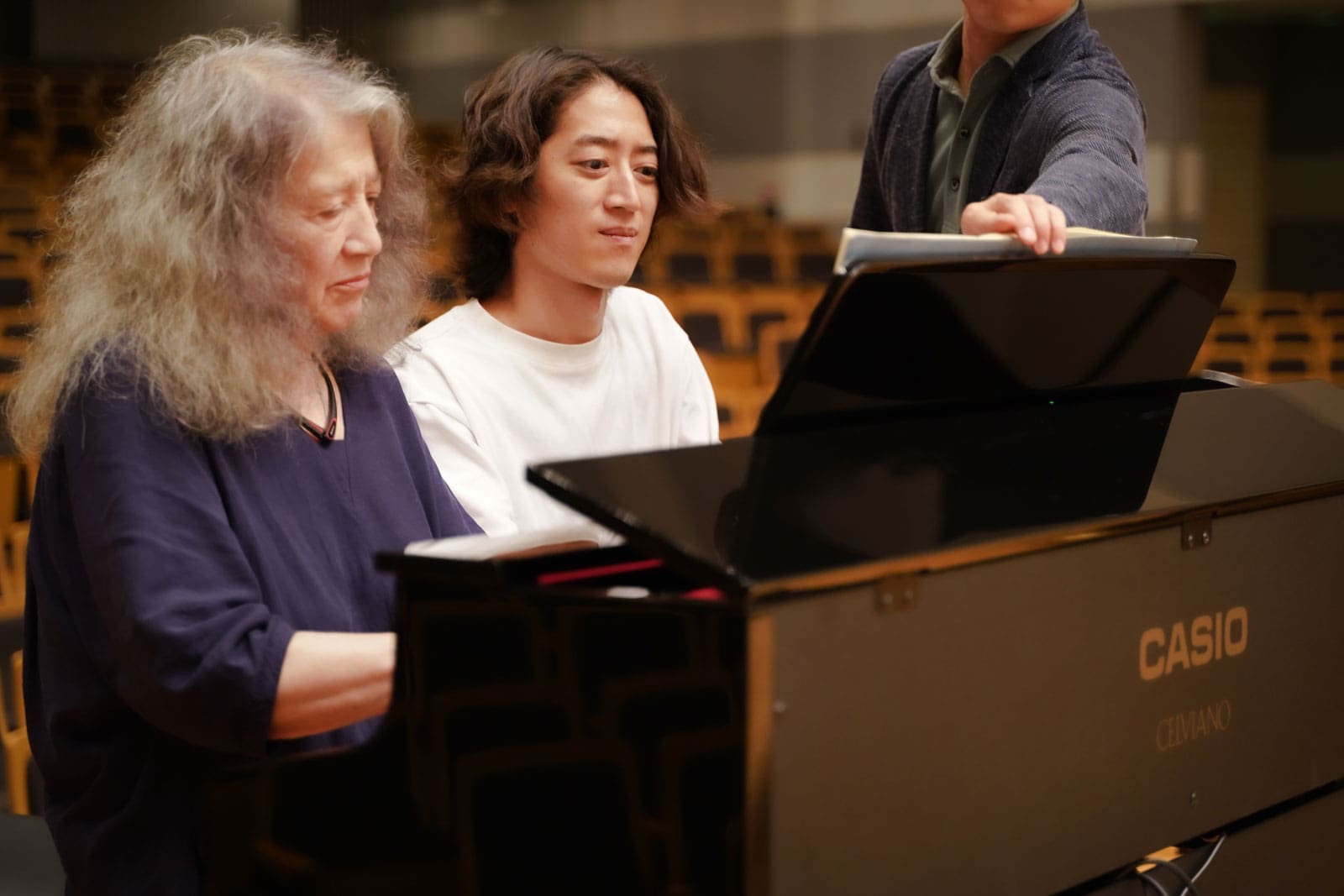
Hayato also came to reflect on the deeper meaning of the project thanks to these experiences. “Akiko’s Piano is a very profound instrument, carrying so many different stories within it. One day it may no longer be playable, which is why preserving it digitally so that it can endure for future generations to experience is a powerful message in and of itself. This project reflects a clear intention to pass it on to the future, for generations to come.”
Memory Spoken Through Sound, A Future Linked by Resonance
Hayato’s words suggest far more than the simple fact that the sound has been preserved digitally. True preservation means something more, it means ensuring that the sound continues to live on through the hands of those who touch, play and bring it back to life.
Shoji, who has also closely followed the project, reflected on the essence of Akiko’s Piano:
“Akiko’s Piano is more than just an object, it is something that carries the human spirit. Martha Argerich once described its sound as something that contains an essence beyond that of a mere instrument. When I heard her say that, I naturally felt that this was not simply a project to digitally preserve the piano, but an act of passing something on to the future.
At the same time, a sound is not complete the moment it is recorded. Its meaning comes to life only when someone plays it. What matters most is that it continues to be passed on from person to person.”
So, what role can a company play in that act of passing something forward?
Tetsuro of CASIO was kind enough to elaborate:
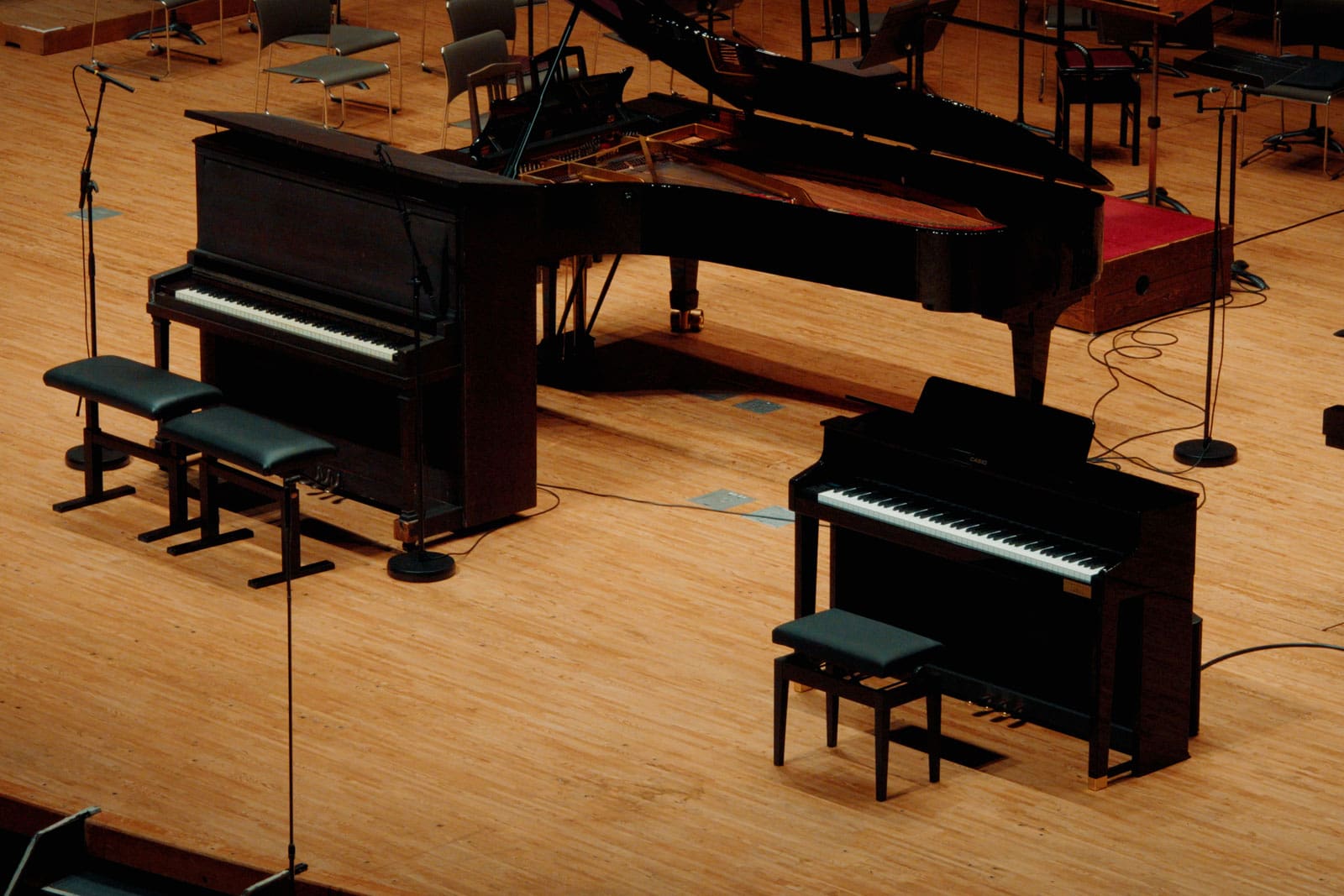
“The CELVIANO digital piano used on stage to reproduce the sound of Akiko’s Piano was designed with the aim of harmonizing the traditional resonance of a grand piano with the modern advancements made possible by digital technology. From this point of view, the development of the CELVIANO naturally aligned with the purpose of this project, allowing it to serve as a bridge that can carry this sound into the future.
Akiko’s Piano holds memories that have been shaped over many years. By preserving those memories in digital form and helping them to be passed on to future generations, we hope to further expand the power of music, by connecting people and carrying emotions across time.”
In closing, Tomie shared his thoughts and emotions as someone who has devoted many years to protecting the piano:
“This is a reality beyond what we ever imagined possible. The fact that this sound can now reach people who have never had the chance to touch the piano in person is truly remarkable. I hope that children and those who love music all around the world, will be able to experience not only the sound of Akiko’s Piano, but also the message of peace that its spirit carries.”
Sound does not end after it’s recorded, it gains new life each time it’s played.
The resonance of Akiko’s Piano will continue to be passed on into the future both through its sound and its message of peace, through the hands of those who play it.
Acknowledgements
HOPE Project (General Incorporated Association)
https://www.akikos-piano.com
Public Interest Incorporated Association
Hiroshima Symphony Orchestra Association